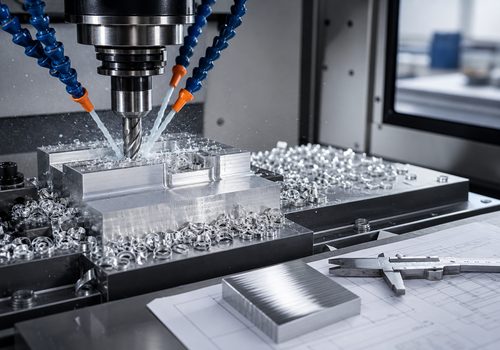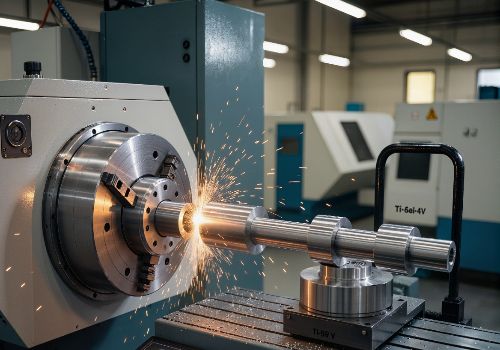
Titanium is renowned as a “wonder metal” for its exceptional strength-to-weight ratio, corrosion resistance, and biocompatibility, making it indispensable in aerospace, medical, and high-performance engineering. However, its very properties that make it desirable also make it notoriously challenging to machine. Successfully milling, turning, or drilling titanium with CNC requires a specialized strategy that differs fundamentally from machining more common materials like steel or aluminum.
This comprehensive guide breaks down the science and art of titanium machining, providing actionable strategies to overcome its challenges, optimize your process, and produce flawless titanium components.
Understanding the Challenge: Why Titanium is Difficult to Machine
To machine titanium effectively, you must first understand what you’re up against. The primary difficulties stem from its material science:
-
Low Thermal Conductivity: Titanium conducts heat poorly—about 1/6 as effectively as steel and 1/16 as well as aluminum. This means the intense heat generated at the cutting edge doesn’t dissipate into the chips or workpiece. Instead, it concentrates in a very small area of the tool, leading to extremely high localized temperatures (often exceeding 1000°C). This accelerates tool wear through diffusion, plastic deformation, and cratering.
-
High Strength at Elevated Temperature: While most metals soften when hot, titanium retains much of its strength even at the high temperatures experienced during cutting. This means the cutting tool is constantly battling a strong, unforgiving material, requiring high cutting forces.
-
Chemical Reactivity and Galling: At high temperatures, titanium becomes chemically reactive and can weld itself to the tool material in a process known as “galling” or built-up edge (BUE). This leads to edge chipping, poor surface finish, and catastrophic tool failure.
-
Low Elastic Modulus: Titanium is relatively “springy.” This elasticity can cause the workpiece to deflect under cutting forces, leading to chatter, dimensional inaccuracies, and tool deflection, especially in thin-walled parts.
The Four Pillars of Successful Titanium Machining
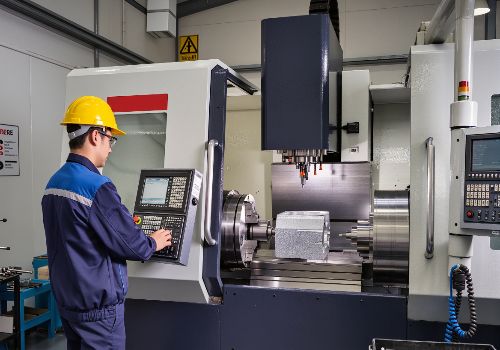
Conquering titanium requires a holistic approach focused on four key areas: Tooling, Parameters, Stability, and Cooling.
1. Tooling: Your First Line of Defense
Choosing the right tool is not a suggestion; it’s a requirement.
-
Tool Material: Carbide is the baseline standard. For severe applications or higher speeds, micro-grain or sub-micro-grain carbide offers better wear resistance and toughness. For the ultimate performance in finishing operations, Polycrystalline Diamond (PCD) tools provide exceptional life and finish but at a significantly higher cost and with sensitivity to shock.
-
Tool Geometry: Look for tools specifically designed for titanium and high-temperature alloys.
-
Positive Rake Angles: Reduce cutting forces and heat generation.
-
Sharp Cutting Edges: Promote clean shearing rather than deforming the material.
-
Reduced Flute Count: For end mills, fewer flutes (e.g., 3 or 4) provide larger chip valleys for better chip evacuation.
-
Specialized Coatings: Aluminum Titanium Nitride (AlTiN) or Titanium Aluminum Nitride (TiAlN) coatings provide a hard, thermally insulating barrier that protects the carbide substrate from heat. Titanium Silicon Nitride (TiSiN)-based “nano-composite” coatings offer even higher heat and wear resistance.
-
-
Tool Condition: Never run a dull tool. In titanium, a worn tool generates exponentially more heat, leading to rapid failure and potential damage to the workpiece. Implement a strict tool life management protocol.
2. Cutting Parameters: The “Sweet Spot”
The wrong speeds and feeds are the fastest route to failure. The goal is to find a balance that minimizes heat generation and time-in-cut.
-
Surface Speed (SFM): Start conservative. For general purpose machining of Ti-6Al-4V with carbide tools, a range of 50-150 SFM is typical. Roughing operates at the lower end, while finishing can approach the higher end with optimal conditions. PCD tools can run significantly faster.
-
Feed Rate (IPT): Prioritize adequate feed per tooth. Running too slow (“babying” the cut) allows the tool to rub and generate excessive heat instead of shearing. A higher, consistent feed rate produces a thicker chip that acts as a heat sink, carrying heat away from the cut. However, excessive feed increases forces and the risk of chipping.
-
Depth of Cut (DOC) & Width of Cut (WOC): Employ “Trochoidal” or “Adaptive” milling strategies. These CAM toolpaths use a relatively full axial depth of cut but a very small radial step-over (e.g., 5-10% of tool diameter). This keeps the tool engaged in a constant, smooth arc, maximizing material removal while distributing heat and wear along the entire length of the cutting edge, preventing localized thermal shock.
3. Machine and Workpiece Stability: Eliminating Vibration
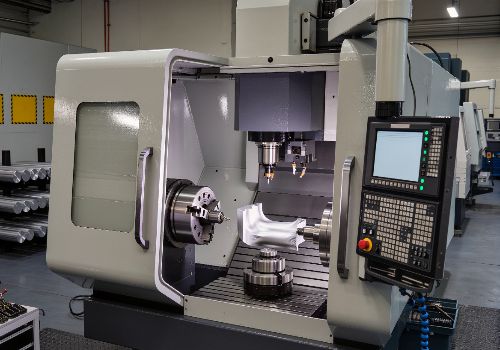
Titanium machining demands rigidity. Any vibration (chatter) will destroy surface finish and tool edges.
-
Machine Tool: Use the most robust CNC machine available. Prioritize a machine with high rigidity, high-torque spindles, and modern digital drives that can handle the cutting forces.
-
Workholding: The workpiece must be immobilized. Use vises, dedicated fixtures, or tombstones that provide maximum clamping force and support. For thin sections, consider custom soft jaws or fixturing that supports the wall to prevent deflection and chatter.
-
Tool Holding: Avoid long overhangs. Use high-precision, rigid tool holders like hydraulic chucks, shrink-fit holders, or precision collet chucks (e.g., TG/PSC type) to maximize tool grip and minimize runout. CAT/BT flanges are generally preferred over HSK for their inherent rigidity in high-force applications.
4. Cooling and Lubrication: Managing the Heat
This is arguably the most critical factor. You must aggressively remove heat from the cutting zone.
-
High-Pressure Coolant (HPC): This is a game-changer. Systems delivering 1,000 PSI or higher are ideal. The goal is not just to flood the area but to force coolant directly into the chip-tool interface. This helps break the chip, lubricate the cut, and, most importantly, evacuate heat.
-
Through-Tool Coolant: Essential for deep cavity machining or drilling. It delivers coolant directly to the cutting edges where it’s needed most.
-
Coolant Type: Use a high-quality, synthetic or semi-synthetic coolant formulated for difficult-to-machine alloys. It must have excellent lubricity, rust inhibition, and the ability to withstand high temperatures without breaking down. Maintain proper concentration and cleanliness.
Machining Strategies by Operation
-
Turning: Use a rigid setup, sharp inserts with a strong geometry (like a positive-rake Wiper insert for finishing), and consistent feed. Avoid letting the tool dwell.
-
Milling: Embrace trochoidal toolpaths. Keep the tool in constant motion and avoid slotting whenever possible. Climb milling is generally preferred.
-
Drilling: Use short, sharp carbide drills with polished flutes. Peck drilling is almost mandatory to break chips and allow coolant to reach the point. High-pressure through-tool coolant is ideal.
Summary Table: Titanium Machining Quick-Reference Guide
| Factor | Key Principle | Best Practice / Starting Point |
|---|---|---|
| Tool Material | Wear & heat resistance | Micro-grain carbide with AlTiN/TiAlN coating |
| Tool Geometry | Reduce forces & heat | Positive rake, sharp edge, reduced flute count |
| Cutting Speed (SFM) | Minimize heat generation | 50-150 SFM for Ti-6Al-4V with carbide |
| Feed Rate (IPT) | Avoid rubbing; create thermal chip | Adequate, consistent chip load (consult tooling data) |
| Cutting Strategy | Distribute heat & load | Trochoidal/Adaptive milling with low radial engagement |
| Coolant | Evacuate heat from the interface | High-Pressure (1000+ PSI) through-tool flood coolant |
| Stability | Eliminate chatter & deflection | Rigid machine, workpiece clamping, and tool holding |
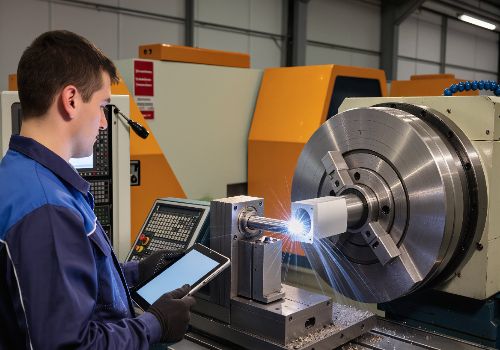
Conclusion: A Discipline of Precision
Machining titanium is not about brute force; it’s about controlled aggression and disciplined precision. Success hinges on respecting the material’s properties and systematically addressing each challenge: managing heat through parameters and coolant, overcoming strength with sharp tools and stability, and preventing reactivity with coatings and proper chip evacuation.
By investing in the right tooling, optimizing your CAM programming for modern toolpaths, and ensuring your setup is rock-solid, you can transform titanium from a machining nightmare into a reliable, profitable, and high-precision process. The result will be strong, lightweight, and perfect components that meet the most demanding applications.
Ready to produce your titanium CNC Machining parts? Contact us, please share the drawing and detail requirements, we are willing to quote for your reference.