The Mirror Finish: A Practical Guide to CNC Perfection
In the world of precision manufacturing, few achievements speak as loudly as a flawless mirror finish. More than just aesthetic brilliance, a surface smooth enough to reflect a clear image represents the pinnacle of machining control, material integrity, and technical expertise. For products ranging from high-end consumer electronics and automotive trim to critical medical implants and optical components, a mirror finish is often a non-negotiable requirement for function, durability, and market appeal.
Achieving this level of perfection with Computer Numerical Control (CNC) machining is not a single trick but a disciplined process. It involves a strategic combination of the right equipment, cutting-edge tooling, precise parameters, and often, specialized post-processing techniques. This guide breaks down the key principles and methods to transform a machined surface into a perfect mirror.
The Foundation: What Defines a Mirror Finish?
Before diving into the “how,” it’s crucial to understand the “what.” A mirror finish is quantitatively defined by its surface roughness, measured in microns (µm) or nanometers (nm). While specifications can vary by industry, a surface is generally considered to have a mirror finish when the average surface roughness (Ra) is 0.05 µm (50 nm) or less. For ultra-precision applications in optics or semiconductors, this requirement can reach into the single-digit nanometer range (Ra < 10 nm).
Achieving such metrics requires addressing every variable in the machining chain: machine stability, tool selection, material behavior, and cutting dynamics.
The Two Main Pathways: Cutting vs. Polishing
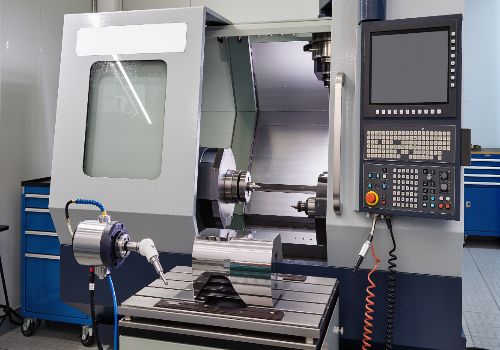
There are two fundamental philosophies for creating a mirror finish with CNC: achieving it directly through cutting operations or using CNC-guided polishing as a secondary process.
1. Direct Mirror Finishing via Cutting
This method aims to produce the final mirror surface in the CNC mill or lathe itself, eliminating or minimizing manual polishing.
-
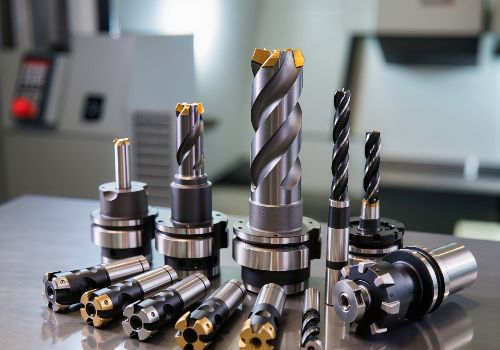
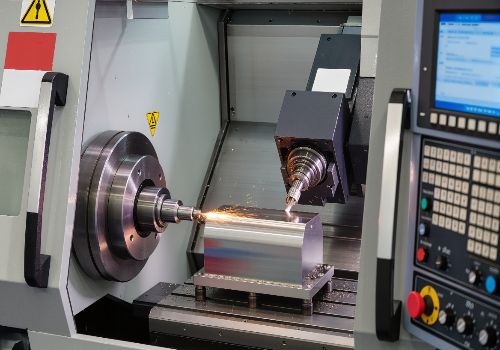
The Tooling Edge: PCD & cBN Diamond Tools The cornerstone of this approach is using tools made from ultra-hard materials. Polycrystalline Diamond (PCD) ball end mills are exceptionally effective for finishing hardened steels and alloys. Their sharp, durable edge and specific cutting geometry allow for ductile-mode machining, where material is cleanly sheared rather than fracturing, leaving a pristine surface. Research has shown PCD tools capable of achieving surface roughness below 15 nm Ra on hardened stainless steel.
-
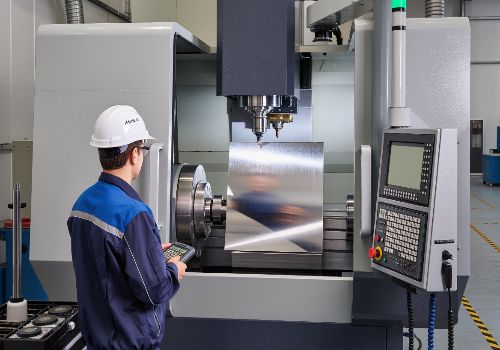
Machine & Environmental Rigidity The machine tool must provide extreme stability. This includes features like liquid hydrostatic guides to minimize vibration, thermal error compensation systems to counteract heat-induced drift, and operation within a controlled environment. Any vibration or minute movement will be etched into the surface.
-
Meticulous Parameter Control Success hinges on fine-tuned parameters: high spindle speeds, very low and consistent feed rates, and minimal step-overs. The process is often a final, dedicated finishing pass after roughing and semi-finishing with conventional tools.

2. CNC-Controlled Polishing
For materials that are difficult to cut or for achieving the absolute lowest roughness (often required in optics), CNC is used to automate and perfect the polishing process.
-
Robotic CNC Polishing Advanced systems use robotic arms equipped with polishing heads to follow complex paths with consistent pressure. A key challenge has been the “edge effect,” where traditional tools struggle to maintain uniformity at a part’s edges. Innovative solutions, like the variable orbital radius technique developed for telescope mirrors, now allow for full-surface correction in one cycle without tool changes, dramatically improving efficiency.
-
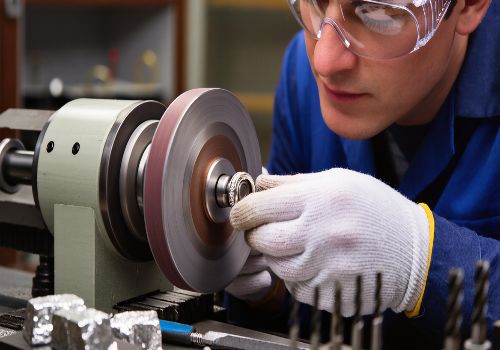
Specialized Polishing Techniques Beyond traditional abrasives, several advanced CNC-integrated methods exist:
-
Magnetorheological Finishing (MRF): Uses a magnetic field to shape a abrasive fluid into a precise polishing tool, excellent for complex optics.
-
Fluid Jet & Hydrodynamic Polishing: Methods like “Ring Tool Hydrodynamic Polishing” use a fluid film carrying abrasive particles to polish without direct tool contact, preventing surface damage and achieving roughness as low as 4.4 nm Ra.
-
Chemical Mechanical Polishing (CMP): Often combined with MRF, CMP uses a chemical slurry to achieve atomic-level smoothness on materials like aluminum alloys for mirrors.
-
The table below summarizes the core characteristics of these two primary approaches:
| Aspect | Direct CNC Cutting | CNC-Guided Polishing |
|---|---|---|
| Primary Goal | Produce finish as-machined | Refine a pre-machined surface |
| Best For | Metals, engineered plastics, molds/dies | Optics, complex geometries, ultra-smooth finishes |
| Key Tooling | PCD/cBN diamond tools, fine-grain carbide | Polishing heads, abrasive slurries, MRF fluid |
| Surface Roughness (Ra) | ~0.05 µm down to 0.01 µm (10 nm) | < 0.01 µm (10 nm) down to < 1 nm |
| Material Removal | Micro-cutting/shearing | Abrasion, chemical-mechanical action |
Critical Success Factors for Any Method
Regardless of the path you choose, several universal principles apply:
-
Start with a Superior Semi-Finish: A mirror finish can only be as good as the surface it starts with. The final polishing or finishing step is for refinement, not for correcting major imperfections from previous operations.
-
Rigorous Tool Management: Tools must be flawless. For cutters, this means perfect geometry, no microscopic chips, and dedicated use for finishing only. For polishing tools, consistent shape and abrasive distribution are key.
-
Path Planning & Motion Control: The toolpath is critical. It must avoid directional patterns that create visible “cusping” or “texture.” For polishing, advanced dwell time algorithms ensure the tool spends exactly the right amount of time on each area to achieve uniform material removal.
-
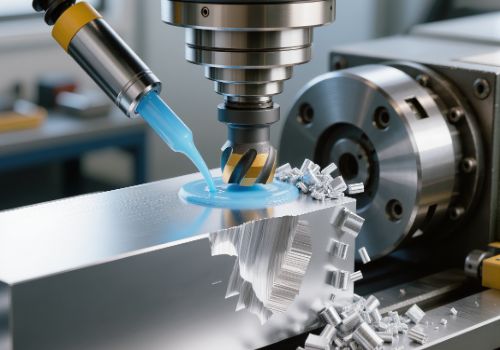
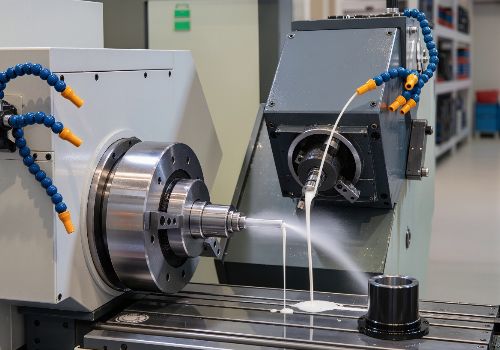
Coolant and Cleanliness: Absolutely essential. Coolant must be abundant, filtered to sub-micron levels, and directed perfectly to prevent any built-up edge (BUE) or welding of chips to the surface. The workspace must be clean, as a single dust particle can cause a deep scratch.
Real-World Applications
-
Injection Molds: For plastic parts requiring glossy surfaces (e.g., lenses, consumer goods), PCD tools directly machine mirror finishes into hardened mold steel cavities, eliminating manual polishing and ensuring perfect form accuracy.
-
Aerospace & Automotive Optics: Aluminum alloy mirrors for sensors and lidar systems are diamond-turned and then finished with combined MRF and CMP processes to achieve nanometer-level smoothness for optimal optical performance.
-
Architectural Metal: Large, flat or curved metal panels for buildings are finished using automated CNC polishing systems that can handle big areas with consistent results.
Conclusion: A Symphony of Precision
Achieving a mirror finish with CNC is less about finding a magic setting and more about orchestrating a symphony of precision. It demands the right combination of machine stability, cutting-edge tooling, meticulous process parameters, and impeccable environmental control.
For manufacturers, investing in this capability opens doors to high-value markets. Begin by evaluating your component’s material, geometry, and roughness specification. Start with perfecting the semi-finish, experiment with PCD tooling for direct finishing, or partner with a specialist for advanced CNC polishing processes. By mastering these techniques, you can turn functional metal into a reflective masterpiece, adding significant value and quality to your products.
Ready to bring a brilliant reflection to your parts? Contact our precision engineering team today for a consultation on your mirror finish application.