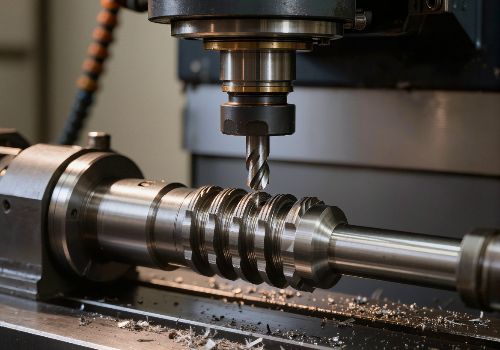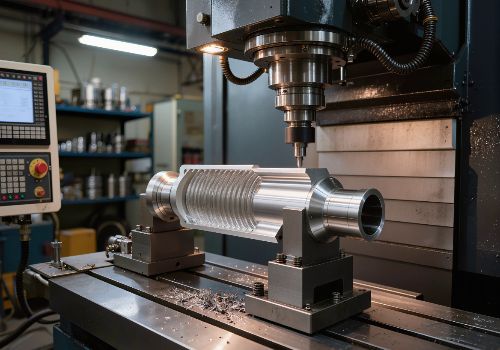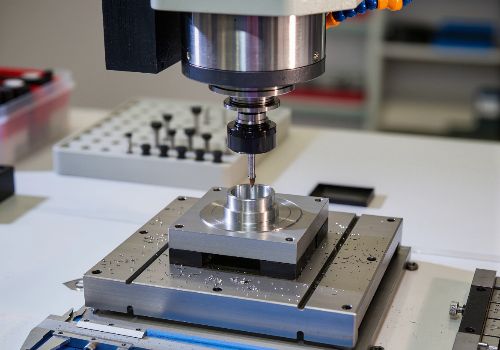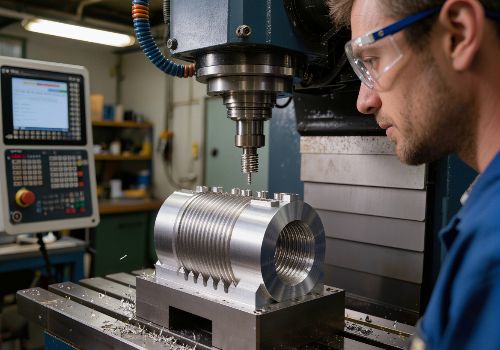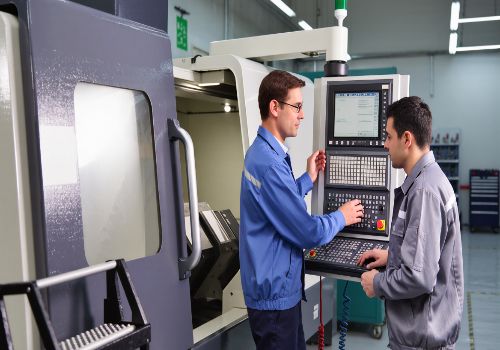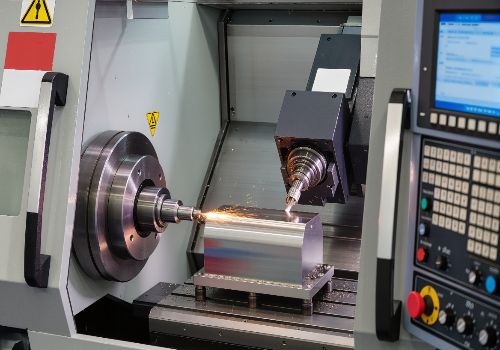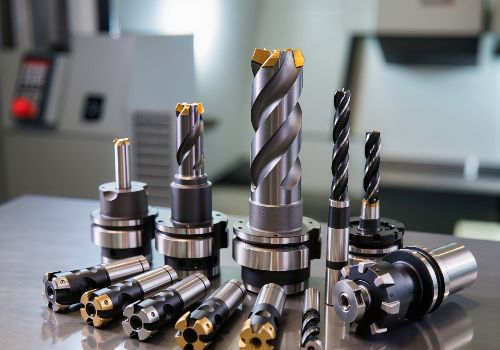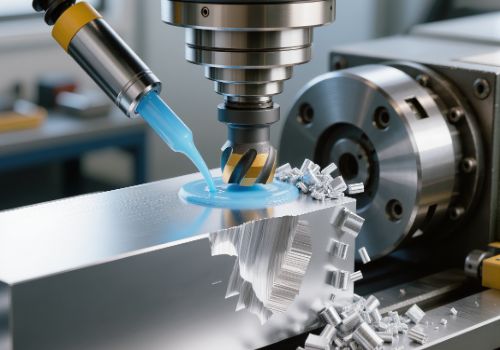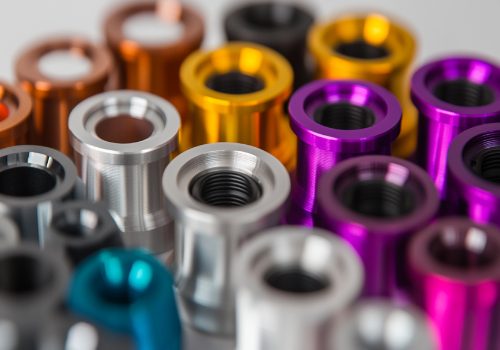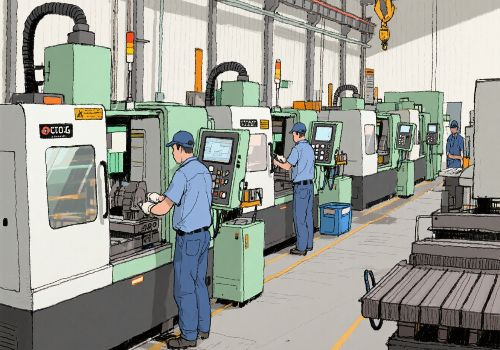
Achieving tight tolerances in CNC machining requires a systematic approach that integrates machine calibration, thermal management, tool selection, workholding rigidity, and in-process verification. By controlling every variable in the machining environment—from the temperature of the coolant to the sharpness of the cutting edge—manufacturers can consistently hold tolerances as tight as ±0.0002 inches (±0.005 mm) in common materials and approach ±0.0001 inches (±0.0025 mm) in optimized conditions.
Introduction: The Precision Imperative
In the world of precision manufacturing, tolerances are the language of quality. A tolerance of ±0.005 inches might be generous for a structural bracket but entirely unacceptable for a fuel injector nozzle or a spinal implant. As industries push toward greater efficiency, lighter weight, and higher performance, the demand for tighter tolerances continues to escalate.
Aerospace components routinely require ±0.0005-inch tolerances on critical features. Medical implants demand surface finishes and dimensional accuracy measured in microns. Hydraulic valve bodies need bore roundness within millionths of an inch to prevent leakage. These requirements separate commodity machining from high-value precision manufacturing.
But achieving tight tolerances is not simply a matter of buying a more expensive machine or a better measuring tool. It requires a disciplined, systematic approach that addresses every factor influencing dimensional accuracy. This guide will walk you through the proven strategies that precision machine shops use to consistently hold tight tolerances—and how you can implement them in your operations.
Understanding Tolerance Terminology
efore diving into strategies, it’s essential to understand what “tight tolerance” actually means in practical terms:
| Tolerance Grade | Typical Range | Application Examples | Machining Difficulty |
|---|---|---|---|
| Standard Commercial | ±0.005″ to ±0.010″ (0.13-0.25 mm) | Structural brackets, housings, non-critical features | Low |
| Precision | ±0.001″ to ±0.005″ (0.025-0.13 mm) | Engine components, bearing fits, mating surfaces | Moderate |
| High Precision | ±0.0005″ to ±0.001″ (0.013-0.025 mm) | Fuel system components, hydraulic spools, mold cores | High |
| Ultra-Precision | ±0.0001″ to ±0.0005″ (0.0025-0.013 mm) | Aerospace critical features, optical mounts, precision bearings | Very High |
| Micro-Precision | < ±0.0001″ (< 0.0025 mm) | Semiconductor components, precision measurement artifacts | Extreme |
The strategies required for each level differ significantly. What works for ±0.005″ may be entirely inadequate for ±0.0005″.
The Six Pillars of Tolerance Control
1. Machine Capability and Calibration
Your machine tool is the foundation of accuracy. No amount of programming or tooling optimization can compensate for a machine that cannot position accurately or maintain spindle integrity.
Machine Specifications That Matter:
Positioning Accuracy: Modern CNC machines typically advertise positioning accuracy of ±0.0002″ (±0.005 mm) or better. But these are laboratory numbers. Real-world performance depends on installation, maintenance, and environmental conditions. When specifying a machine for tight tolerance work, look for:
-
Linear scales on all axes (not just motor encoders)
-
Glass scale feedback for true position verification
-
Thermal compensation systems that adjust for temperature changes
-
Minimum resolution of 0.0001″ (0.0025 mm) or finer
Spindle Integrity: Spindle runout directly affects hole size, circularity, and surface finish. For tight tolerance work:
-
Measure runout at the spindle taper regularly
-
Aim for ≤0.0002″ (0.005 mm) total indicated runout (TIR)
-
For ultra-precision work, air-bearing spindles achieve runout below 0.000050″
Regular Calibration Schedule:
| Frequency | Calibration Activity | Acceptance Criterion |
|---|---|---|
| Daily | Warm-up cycle (30-45 minutes) | Stable temperature throughout machine structure |
| Weekly | Check critical tool holders for runout | <0.0002″ TIR |
| Monthly | Verify machine level | 0.0002″/ft or better |
| Quarterly | Ballbar test for circularity and backlash | Circularity <0.0005″ |
| Annually | Full laser interferometer calibration | Positioning accuracy within machine spec |
The Warm-Up Imperative:
One of the most common causes of tolerance drift is insufficient warm-up. A cold machine behaves differently than a machine at operating temperature. The spindle bearings expand, the ballscrews lengthen, and the machine structure settles.
Best practice: Run a 30-45 minute warm-up cycle before any tight tolerance work. The cycle should exercise all axes and the spindle at expected operating speeds. Monitor temperature at key points (spindle housing, ballscrews, machine base) until stabilization occurs.
2. Thermal Management: Controlling the Invisible Variable
Heat is the enemy of precision. A 10°F (5.5°C) temperature change expands a 12-inch steel part by approximately 0.0007 inches—enough to push a tight tolerance part out of specification. The challenge is that heat sources are everywhere: the spindle, the cutting action, the coolant, the hydraulic system, and even ambient temperature changes.
Environmental Control:
-
Climate-controlled shop: Maintain temperature within ±2°F (±1°C) for precision work, ±1°F (±0.5°C) for ultra-precision
-
Isolate the machine: Avoid placement near doors, windows, or HVAC vents
-
Monitor continuously: Install thermocouples at key machine locations and log temperature data
Cutting Heat Management:
-
High-pressure coolant: Through-spindle coolant at 1,000+ PSI evacuates heat at the cutting interface
-
Cryogenic cooling: For challenging materials, liquid nitrogen cooling maintains stable temperatures
-
Minimum Quantity Lubrication (MQL): Reduces heat generation compared to flood coolant in some applications
Thermal Compensation:
Modern CNC controls offer thermal compensation features that automatically adjust axis positions based on temperature sensors. These systems can correct for:
-
Ballscrew growth (the most significant thermal error source)
-
Spindle housing expansion
-
Machine base distortion
For existing machines without built-in compensation, consider aftermarket thermal monitoring systems that feed correction data through the machine’s external offset inputs.
3. Workholding: Rigidity Without Distortion
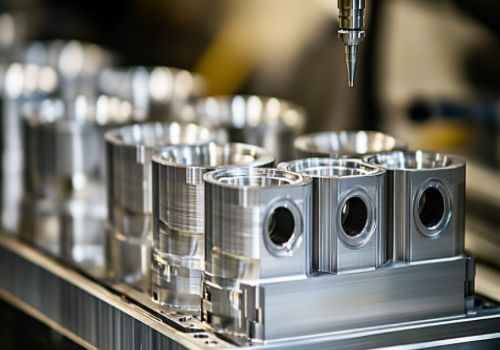
The workpiece must be held securely enough to resist cutting forces, but gently enough to avoid distortion. This balance is critical for tight tolerances.
Clamping Principles:
-
Full contact surfaces: Use soft jaws machined to match the part contour
-
Even pressure distribution: Multiple clamp points rather than single point loads
-
Clamping sequence: Tighten in a pattern that minimizes distortion
-
Clamping force control: Use torque wrenches or hydraulic/pneumatic clamps with pressure gauges
Workholding Solutions for Tight Tolerances:
| Application | Recommended Workholding | Key Advantage |
|---|---|---|
| Thin plates | Vacuum chuck | Uniform pressure, no distortion |
| Irregular shapes | Custom soft jaws | Full contact, even clamping |
| Round parts (lathe) | Collet chuck | Concentric gripping, minimal runout |
| Precision bores | Expanding mandrel | Internal gripping with minimal distortion |
| Delicate features | Adhesive mounting (wax/cyanoacrylate) | No clamping forces |
| High volume | Hydraulic/pneumatic fixture | Consistent, repeatable clamping force |
The Stress-Free Approach:
For critical tolerance features, consider machining in a “stress-free” state:
-
Rough the part with heavy stock removal
-
Remove from fixture and allow stress to equalize (24-48 hours)
-
Re-fixture using low-stress method (vacuum or adhesive)
-
Finish machine to final tolerances
This approach is standard practice for aerospace and precision mold components.
4. Tooling Precision and Management
The cutting tool is the final link in the accuracy chain. Tool runout, wear, and geometry all directly affect dimensional results.
Tool Runout Control:
Runout at the tool tip multiplies errors. A 0.0002″ runout at the tool holder results in 0.0004″ variation in hole size or feature position.
Toolholder selection for tight tolerances:
| Toolholder Type | Typical Runout | Best Application | Cost |
|---|---|---|---|
| ER Collet | 0.0002-0.0005″ | General purpose | Low |
| TG Collet | 0.0002-0.0004″ | Better grip than ER | Low-Medium |
| Hydraulic Chuck | 0.0001-0.0002″ | High precision, damping | Medium-High |
| Shrink-Fit | 0.0001-0.00015″ | High speed, precision | High |
| Milling Chuck | 0.0002-0.0003″ | Heavy milling | Medium |
For ultra-precision work (tolerances under ±0.0005″), invest in hydraulic or shrink-fit holders and verify runout on every setup.
Tool Wear Management:
Tool wear changes the effective cutting geometry, affecting part dimensions. For tight tolerances:
-
Implement tool life limits based on actual wear measurement, not estimates
-
Use in-process probing to measure critical features and adjust offsets
-
Schedule tool changes at predetermined intervals, not “when it sounds bad”
-
Inspect wear under magnification (20-50x) to detect edge degradation early
Tool Geometry for Precision:
-
Corner radius: Sharp corners wear faster; use 0.010-0.030″ radius for finishing
-
Wiper inserts: Specialized geometries that “wipe” the surface for superior finish at higher feeds
-
Positive rake: Reduces cutting forces, minimizing deflection
-
Polished flutes (aluminum): Prevents built-up edge that changes effective geometry
5. Cutting Parameters for Precision
Tight tolerances demand different cutting parameters than high material removal rates. The goal shifts from efficiency to stability and predictability.
The Finishing Pass Philosophy:
Never try to achieve final tolerance in a roughing pass. The proven approach:
-
Roughing: Remove bulk material, leave 0.010-0.020″ stock
-
Semi-finish: Remove to within 0.002-0.005″ of final dimension
-
Finish: Remove remaining stock with optimized parameters
Parameter Guidelines for Finishing Passes:
| Parameter | Recommended Setting | Reason |
|---|---|---|
| Radial engagement (stepover) | 5-10% of tool diameter | Minimizes deflection and heat |
| Axial depth | Full feature height if possible | Distributes wear, avoids step marks |
| Feed per tooth | 0.0005-0.002″ (light) | Reduces cutting forces |
| Cutting speed | Moderate to high (material dependent) | Clean shearing, reduced built-up edge |
| Coolant | Flood or through-spindle | Heat evacuation, chip clearing |
Climb vs. Conventional for Precision:
For most finishing operations, climb milling produces superior surface finish and better dimensional accuracy. The cutting forces pull the tool into the workpiece, stabilizing the cut. However, on thin walls or delicate features, conventional milling may produce less deflection because the tool pushes away from the feature rather than into it.
6. In-Process Verification and Adaptive Control
The most powerful strategy for achieving tight tolerances is to measure during machining and adjust accordingly.
Probing Systems:
Modern CNC machines can be equipped with touch probes (Renishaw, Marposs, Blum) that measure features in-process:
-
Tool length and diameter measurement: Automatically set and verify tool geometry
-
Workpiece alignment: Locate part position and orientation
-
In-cycle inspection: Measure critical features during the machining process
-
Broken tool detection: Verify tool integrity before critical operations
Adaptive Machining:
With in-process probing data, the CNC can automatically adjust:
-
Tool offsets: Compensate for wear or thermal growth
-
Work coordinate systems: Correct for fixture or part position variation
-
Cutting parameters: Adjust feeds and speeds based on measured conditions
The Measure-Machine-Measure Cycle:
For the tightest tolerances, implement a closed-loop process:
-
Machine rough features
-
Probe to measure remaining stock
-
Adjust finishing toolpaths based on actual material condition
-
Machine finish features
-
Probe to verify dimensions
-
If out of tolerance, apply offset and re-cut
This approach, sometimes called “adaptive machining” or “closed-loop machining,” can achieve tolerances half of what the machine can hold in open-loop operation.
Material-Specific Tolerance Strategies
Different materials behave differently when machined to tight tolerances:
Aluminum (6061, 7075)
-
Best practices: Use sharp, polished carbide tools; climb mill for finish; flood coolant for heat control
-
Challenges: Thermal expansion (0.000013 in/in/°F) requires temperature control
-
Tolerance capability: ±0.0005″ achievable in production; ±0.0002″ possible with careful process control
Stainless Steel (304, 316, 17-4)
-
Best practices: Rigid setups, sharp positive rake tooling, generous coolant flow
-
Challenges: Work hardening (can increase hardness 2-3x), built-up edge
-
Tolerance capability: ±0.0005″ achievable; tighter requires slower speeds and frequent tool changes
Titanium (Grade 5, Ti-6Al-4V)
-
Best practices: High-pressure through-spindle coolant, sharp tools, light radial engagement
-
Challenges: Low thermal conductivity (heat concentrates at cutting edge), springiness (low modulus)
-
Tolerance capability: ±0.001″ typical; ±0.0005″ possible with optimized process
Steel (4140, 4340, tool steels)
-
Best practices: Rigid setups, carbide tooling, conservative speeds
-
Challenges: Heat treatment affects machinability; residual stress causes movement
-
Tolerance capability: ±0.0005″ achievable in production; ±0.0002″ possible in hardened state (45+ HRC)
Case Study: Achieving ±0.0003″ on a Hydraulic Valve Spool
The Challenge: A hydraulic valve manufacturer needed spools with 0.3750″ ±0.0003″ diameter over a 4-inch length, with 8-micron roundness and 16 µ-in surface finish. The material was 17-4 PH stainless steel at 38 HRC.
The Solution:
-
Machine: High-precision Swiss-type lathe with glass scales and thermal compensation
-
Environment: Climate-controlled shop at 68°F ±1°F
-
Workholding: 5C collet with precision ground pads
-
Tooling: CBN inserts for finishing; hydraulic toolholder with <0.0001″ runout
-
Process:
-
Rough turn to 0.380″ diameter
-
Stress relieve (cryogenic treatment)
-
Re-fixture using same collet orientation
-
Semi-finish to 0.376″ diameter
-
Measure in-process (laser micrometer)
-
Finish pass at 0.0005″ depth, 0.0015″ feed, 400 SFM
-
Probe verify diameter; spring pass if needed
-
The Results:
-
Achieved ±0.0002″ to ±0.0003″ on 100% of parts
-
Roundness <0.000050″ (50 millionths)
-
Surface finish Ra 12-14 µ-in
-
Process capability (Cpk) >1.33 after optimization
Common Tolerance Pitfalls and Solutions
| Problem | Likely Cause | Solution |
|---|---|---|
| Inconsistent diameters on same setup | Tool wear or thermal growth | Implement tool life limits; use coolant; shorter cycle times |
| Features shift between operations | Part movement or stress relief | Improved workholding; stress relief before finishing |
| Holes not round | Spindle runout or incorrect interpolation | Check spindle runout; use helical interpolation |
| Dimensions drift throughout shift | Machine warming up or coolant temperature change | Extended warm-up; coolant chiller; thermal compensation |
| Good at machine, bad on CMM | Temperature difference | Soak parts to room temperature before inspection |
| Batch-to-batch variation | Material differences or tool lot variation | Consistent material sourcing; qualify tool lots |
Conclusion: Precision as a Process, Not an Event
Achieving tight tolerances in CNC machining is not about a single magic technique or a specific brand of machine. It is a systematic process that integrates every aspect of your manufacturing operation—from the temperature of your shop to the sharpness of your cutting tools to the calibration of your probing system.
The most successful precision machine shops view tolerance control as a closed-loop system:
-
Plan the process with all variables considered
-
Execute with disciplined adherence to parameters
-
Measure with appropriate metrology
-
Analyze the data to identify variation sources
-
Adjust the process based on findings
-
Repeat with continuous improvement
By implementing the strategies in this guide—machine calibration, thermal management, proper workholding, precision tooling, optimized parameters, and in-process verification—you can consistently achieve the tight tolerances that command premium pricing and open doors to high-value industries like aerospace, medical, and defense.
Ready to push your precision capabilities to the next level? Contact our technical team for a comprehensive assessment of your current tolerance capabilities and a customized roadmap for achieving your tightest specifications.