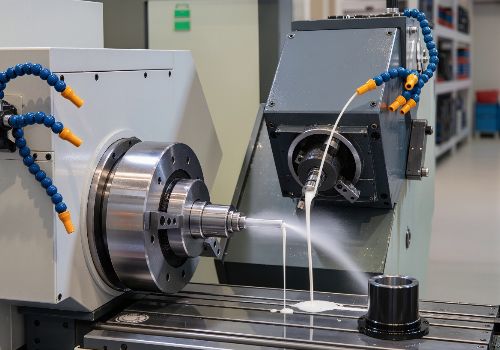
The correct lubricants for CNC machines are specialized oils and greases formulated for specific subsystems: hydraulic oils for power transmission, way oils for slideways, spindle oils for high-speed bearings, and greases for gears and ball screws. Selecting the right type, viscosity, and additive package is critical for machine precision, component longevity, and avoiding costly downtime.
Introduction: Why Lubrication is a Precision Science, Not an Afterthought
In the world of CNC machining, where tolerances are measured in microns and spindles spin at tens of thousands of RPM, lubrication is far more than just “oiling the machine.” It is a fundamental engineering requirement. Using the wrong lubricant—or neglecting lubrication altogether—can lead to a cascade of failures: accelerated wear, loss of positioning accuracy, thermal deformation, and catastrophic component seizure.
This guide breaks down the complex landscape of CNC lubricants. We’ll move beyond generic advice to provide a clear, actionable framework for selecting the right fluids and greases for each critical subsystem of your machine tool, ensuring optimal performance and protecting your valuable investment.
The Four Pillars of CNC Lubrication
A modern CNC machine is a system of systems, each with unique demands. Lubricants are formulated to meet these specific challenges.
1. Hydraulic Oils: The Power Transmission Fluid
Hydraulic systems power tool changers, clamps, and counterbalances. Their oil must transmit power efficiently while protecting pumps and valves.
-
Primary Function: Power transfer, heat dissipation, and protection against wear and corrosion.
-
Key Characteristics: Anti-wear (AW) additives (like Zinc Dialkyldithiophosphate or ZDDP) are non-negotiable. They form a protective film on metal surfaces under high pressure. Good demulsibility (the ability to separate from water) and oxidation stability are also crucial.
-
Common Viscosity Grades: ISO VG 32 or 46. Always consult your machine tool builder’s manual for the specified grade.
-
Pro Tip: Never use a generic motor oil in a hydraulic system. It lacks the necessary anti-wear and anti-foam additives and can damage sensitive servo valves.
2. Way Lubricants: Protecting the Machine’s Foundation
The slideways (linear guides and box ways) carry the entire weight of the axis carriages. Friction here directly impacts precision and can cause stick-slip motion (jerky movement).
-
Primary Function: Reduce friction between sliding surfaces and prevent adhesive wear (galling).
-
Key Characteristics: Tackifiers are essential. These additives give the oil a “sticky” quality, making it cling to vertical and overhead surfaces. High film strength is needed to handle the heavy loads.
-
Common Viscosity Grades: ISO VG 68 or 220, with higher viscosity used for heavier loads and slower speeds. Way oil is often dyed a distinctive color (like blue or red) to distinguish it from other oils in the reservoir.
-
Pro Tip: Using a regular hydraulic oil on ways will cause it to run off, leading to rapid wear and potential scoring of the precision way surfaces.
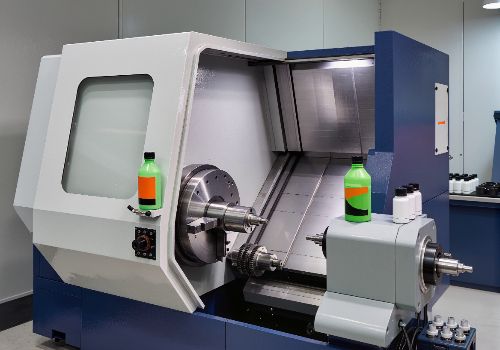
3. Spindle Lubricants: The Guardian of High-Speed Precision
Spindle bearings are the heart of machining accuracy. Their lubrication is a high-stakes science of managing heat, speed, and micro-precision.
-
Primary Function: Lubricate ultra-precision bearings, manage heat generation, and prevent micro-weldding at extreme speeds.
-
Key Characteristics: Exceptional thermal and oxidation stability to resist breakdown at high temperatures. Must be hydroscopic (able to absorb moisture) to protect bearings from corrosion. Often formulated with rust and corrosion inhibitors.
-
Common Types:
-
Grease-Packed: Common for spindles up to ~15,000 RPM. Offers simple, sealed-for-life lubrication. Requires specific re-greasing intervals.
-
Oil-Air (Oil Mist): A precise mixture of oil and air injected into the bearings. Excellent for cooling and high-speed spindles.
-
Oil-Jet: For ultra-high-speed spindles (40,000+ RPM), where oil is directly jetted into the bearing race.
-
-
Pro Tip: Spindle lubrication is strictly “as specified by the builder.” Never experiment with different greases or oils, as even a minor incompatibility can destroy a $20,000 spindle in minutes.
4. Greases: For Enclosed Gears and Auxiliary Components
Greases are used where an oil would not stay in place: gearboxes, ball screw nuts, way wipers, and motor bearings.
-
Primary Function: Provide semi-permanent lubrication in sealed or semi-sealed assemblies, offering both lubrication and a physical seal against contaminants.
-
Key Characteristics: Defined by their thickener (lithium, polyurea, calcium sulfonate) and NLGI consistency grade (e.g., #1, #2). The thickener determines compatibility and temperature range.
-
Common Applications: Machine tool builders often specify a polyurea-based grease (NLGI #2) for spindle bearings and gearboxes due to its excellent high-speed stability and long life. A general-purpose lithium complex grease is common for ball screws and guides.
Table: CNC Lubricant Selection Quick Reference Guide
| Subsystem | Lubricant Type | Critical Properties | Common ISO VG / NLGI Grade |
|---|---|---|---|
| Hydraulics & Lubrication Units | Anti-Wear (AW) Hydraulic Oil | Anti-wear additives, oxidation stability, demulsibility | ISO VG 32, 46 |
| Slideways (Linear Guides, Box Ways) | Way Oil (Slideway Oil) | High film strength, tackifiers (cling) | ISO VG 68, 220 |
| High-Speed Spindle Bearings | Spindle Oil or Spindle Grease | Thermal stability, rust inhibition, high-speed compatibility | As specified by builder (e.g., VG 10, 15, or specific grease) |
| Gearboxes, Ball Screws, Bearings | Machine Tool Grease | Depends on thickener (Polyurea common), mechanical stability | NLGI #1 or #2 (as specified) |
The Critical Details: Viscosity, Additives, and Standards
Understanding Viscosity
Viscosity is a fluid’s resistance to flow, and it is the single most important property. It is not about “thickness,” but about maintaining the correct hydrodynamic film between moving parts under specific operating temperatures.
-
Too Low (Thin): The film breaks down, causing metal-to-metal contact and wear.
-
Too High (Thick): Increased fluid friction generates excess heat, and the oil may not flow properly into tight clearances.
The Rule: Always use the viscosity specified by your machine tool manufacturer. It is calculated based on the component’s design, load, and expected operating temperature.
The Role of Additives
Modern lubricants are engineered fluids. Key additives include:
-
Anti-Wear (AW) & Extreme Pressure (EP): Form protective layers on metal surfaces.
-
Rust & Corrosion Inhibitors: Protect ferrous components from moisture.
-
Anti-Oxidants: Extend oil life by slowing breakdown at high temperatures.
-
Anti-Foam Agents: Prevent air entrainment, which can cause poor lubrication and pump cavitation.
-
Demulsifiers: Allow water to separate and be drained away easily.
Decoding Industry Standards
Look for these certifications on labels:
-
ISO 6743/4: The international standard for lubricant classification (e.g., HM for hydraulic oil with anti-wear properties).
-
DIN 51524: A German standard for hydraulic oils, with Part 2 (HLP) being the common requirement for CNC machines, denoting a refined oil with anti-wear and corrosion protection.
-
Manufacturer Approval: Many machine tool builders (e.g., Haas, Mazak, DMG MORI) have their own approval lists. Using an approved lubricant ensures compatibility and often preserves warranty coverage.
Maintenance Best Practices and Troubleshooting
1. Stick to a Schedule: Follow the Preventive Maintenance (PM) schedule in your manual for oil changes and grease intervals. Harsh environments (grinding, high humidity) may require more frequent service.
2. Practice Cleanliness: Always clean the area around fill ports and grease nipples before servicing. Use clean, dedicated transfer pumps and containers to avoid contamination.
3. Monitor and Sample: Watch for changes in oil color (darkening), consistency, or the presence of metallic particles (silver shimmer). For critical machines, oil analysis is a cost-effective way to track wear, contamination, and oil condition.
Common Lubrication Problems & Solutions:
-
Problem: Sticky or Jerky Axis Movement (Stick-Slip)
-
Likely Cause: Incorrect or degraded way lubricant.
-
Solution: Check way oil level and pump function. Replace with the correct tacky way oil.
-
-
Problem: Rapid Spindle Bearing Failure
-
Likely Cause: Wrong grease/oil type, over-greasing, or contamination.
-
Solution: Verify the exact specification from the spindle builder. Follow re-greasing procedures to the letter—more is not better.
-
-
Problem: Cloudy or Milky Hydraulic Oil
-
Likely Cause: Water contamination, often from coolant ingress or condensation.
-
Solution: Drain and replace the oil. Identify and fix the water source (check cooler seals, tank condensation).
-
Conclusion: Lubrication as a Strategic Investment
Viewing lubricants as a simple commodity is a costly mistake for a CNC operation. The right fluids and greases, applied with knowledge and care, are a strategic investment in precision, reliability, and total cost of ownership. They protect against six-figure repair bills and keep your machine producing revenue.
Your Action Plan: Start by gathering the operator manuals for all your machines. Create a simple lubrication chart listing each subsystem, the specified product, and the service interval. Partner with a reputable lubricant supplier who understands manufacturing. By mastering this essential discipline, you ensure your CNC machines run smoother, last longer, and perform with unwavering accuracy.