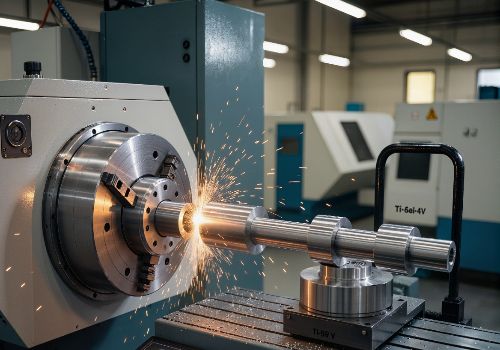
Proper cleaning and maintenance of CNC linear guides involves systematic removal of contaminants, application of correct lubricants, and regular inspection to prevent wear, ensure precision, and avoid costly machine downtime.
Why Linear Guide Maintenance Is Critical
CNC linear guides are the precision foundation of your machine’s motion system. They consist of hardened steel rails and bearing blocks (carriages) that contain recirculating balls or rollers. Unlike traditional sliding ways, these components require specific maintenance to maintain their sub-micron accuracy. Neglect leads to:
-
Premature Wear: Abrasive contaminants act like grinding paste, accelerating wear on rails and bearing elements.
-
Reduced Accuracy and Repeatability: Wear creates play (backlash) and inconsistency in machine positioning.
-
Vibration and Chatter: Rough movement from dirty or dry guides transfers directly into poor surface finishes on parts.
-
Catastrophic Failure: A severely contaminated or unlubricated block can seize, potentially damaging the rail, block, machine way covers, and even the servo motor or ball screw.
A disciplined maintenance routine is not an optional chore—it’s a direct investment in your machine’s capability, part quality, and longevity.
Step 1: The Cleaning Process – Removing the Enemy (Contaminants)
Effective cleaning removes chips, dust, and sticky residue without damaging the guide’s precision surfaces or seals.
Tools & Materials You’ll Need:
-
Lint-free cloths or wipes (e.g., Kimwipes®). Avoid shop rags that shed fibers.
-
High-quality, industrial-grade cleaner/degreaser. Isopropyl alcohol (99%) or dedicated electrical contact cleaners are excellent, residue-free choices. Avoid generic WD-40 as a cleaner; it leaves an oily film.
-
Soft-bristled brushes (plastic or natural fiber) for loosening debris.
-
Plastic scrapers or picks for heavy deposits.
-
Safety glasses and nitrile gloves.
Step-by-Step Cleaning Procedure:
-
Safety First & Access: Power down the CNC machine completely and follow lockout/tagout procedures. Retract way covers manually or jog axes to expose the full length of the guide rails. If possible, follow manufacturer guidelines for partial disassembly for thorough access.
-
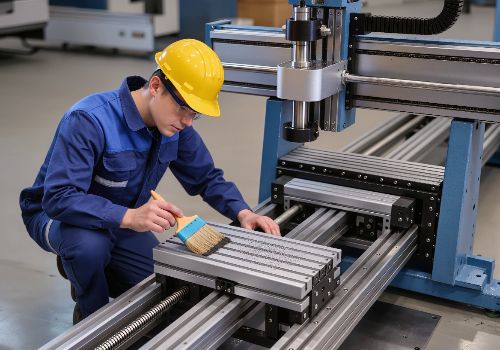
Dry Pre-Cleaning: Use a brush or dry cloth to remove all loose, dry debris like aluminum or cast iron chips. Brushing along the length of the rail (not across) is most effective.
-
Apply Cleaner: Spray a moderate amount of cleaner onto a lint-free cloth—not directly onto the rail or block. Direct spraying can force contaminants past the bearing block’s seals.
-
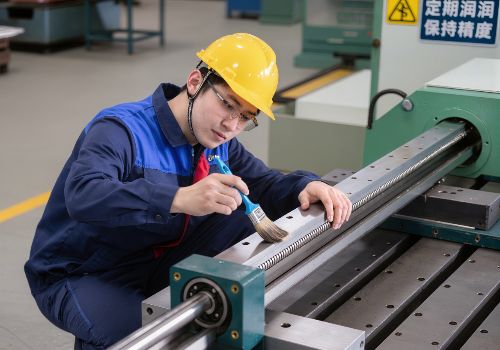
Wipe the Rails: Thoroughly wipe the rail’s running surfaces, side faces, and mounting base. Use a clean section of the cloth frequently. For greasy, caked-on residue, use a plastic scraper gently, followed by cleaning with the wetted cloth.
-
Clean the Bearing Block: Wipe all external surfaces of the block. Do not attempt to disassemble the bearing block. Modern linear guides are sealed units. For metal scraper seals (often found on heavy-duty guides), carefully clean between the seal lips with a cloth-wrapped pick.
-
Final Dry Pass: Use a new, dry lint-free cloth to wipe all surfaces completely dry, ensuring no cleaner residue remains before relubrication.
Step 2: Lubrication – Applying the Protective Film
Lubrication reduces friction, prevents metal-to-metal contact, and forms a barrier against corrosion.
Choosing the Correct Lubricant:
-
Type: Use the lubricant specified in your machine tool manual. Generally:
-
Oil: Often used in central lubrication systems. ISO VG 32 or VG 68 hydraulic/way oils are common.
-
Grease: Used for manual lubrication. Lithium soap-based greases (NLGI Grade 1 or 2) with anti-wear additives are standard.
-
-
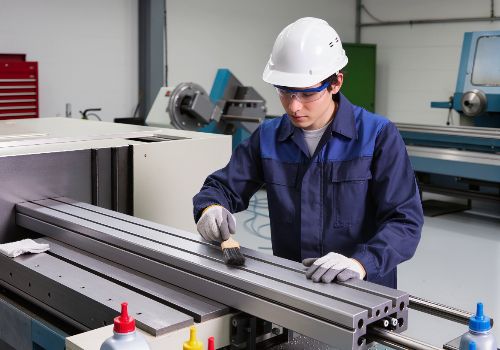
Application: For grease, use a grease gun with a flexible nozzle to fit into the block’s lubrication fittings (zerk fittings). Apply slowly until clean grease is seen purging from the block’s sides. For oil, ensure automatic lubricator reservoirs are filled and functioning, or apply oil manually along the rail/channel.
Step 3: Inspection – The Proactive Health Check
While cleaning, perform a visual and tactile inspection to catch problems early.
What to Look For:
-
Rails: Scratches, dents, corrosion (rust), or discoloration from heat.
-
Bearing Blocks: Damage to seals, cracks in the housing, or excessive play. Check mounting bolts for tightness.
-
Movement: Manually push the axis when disengaged. It should move smoothly with consistent resistance. Any grit, bumps, or binding indicates internal contamination or damage.
-
Lubrication Presence: There should always be a visible, thin film of lubricant on the rails.
Establishing a Maintenance Schedule
Prevention is key. Adhere to a schedule based on your shop’s environment.
Table: CNC Linear Guide Maintenance Schedule
| Frequency | Task | Critical For |
|---|---|---|
| Daily | Visual check for chip buildup on rails/way covers. Wipe exposed rails with dry cloth. | All environments, especially high-production shops. |
| Weekly | Thorough dry clean of accessible rails and blocks. Check lubrication levels in automatic systems. | Moderate to heavy use. |
| Monthly | Full cleaning & relubrication as per steps above. Detailed visual inspection. | All environments. The minimum frequency for most shops. |
| Quarterly | Deep cleaning with partial disassembly (if trained). Inspect seals and check for preload/play. | Harsh environments (grinding, cast iron, wood). |
| Annually | Comprehensive inspection by a qualified technician. Validate alignment and machine geometry. | All machines for preventative care. |
Environment Matters: Double the frequency for harsh conditions (graphite, cast iron, aluminum without coolant, wood dust). These environments generate fine, abrasive particles that readily bypass seals.
Troubleshooting Common Issues
-
Issue: Rough or Noisy Movement
-
Likely Cause: Contamination inside the block or lack of lubrication.
-
Solution: Clean and relubricate thoroughly. If noise persists, the block may be damaged and require replacement.
-
-
Issue: Axis Drift or Loss of Precision
-
Likely Cause: Excessive wear in the block or rail, creating play.
-
Solution: Inspect for visible wear. A qualified technician can perform a backlash test. Worn components typically require replacement as a matched set (rail and block).
-
-
Issue: Visible Corrosion (Rust) on Rails
-
Likely Cause: Exposure to moisture, incorrect (non-inhibited) lubricant, or use of corrosive cleaners.
-
Solution: Light surface rust can be gently polished off with a fine Scotch-Brite pad and lubricant. Address the source of moisture and switch to a rust-inhibitive lubricant.
-
Conclusion: Precision is Preserved Through Routine
The flawless performance of your CNC machine is directly tied to the health of its linear guides. By implementing a consistent routine of cleaning, proper lubrication, and vigilant inspection, you safeguard your machine’s accuracy, protect a significant capital investment, and ensure it produces perfect parts for years to come. Don’t wait for a failure—make linear guide maintenance a non-negotiable pillar of your shop’s preventative maintenance program.
Ready to optimize your machine’s performance? Start by performing a full inspection and cleaning of your CNC’s linear guides this week. For complex issues or replacement, always consult with a qualified service technician.