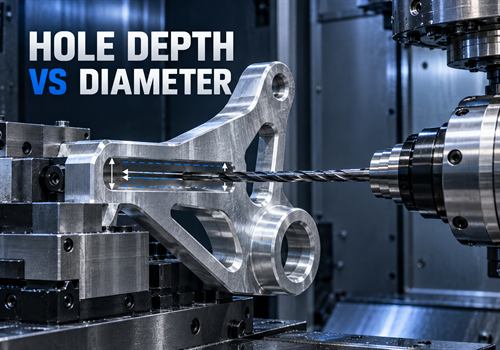
What Is the Most Practical Depth-to-Diameter Ratio for CNC-Drilled Holes?

Quick Answer For many conventional CNC-drilled holes, a depth-to-diameter ratio of approximately 3×D to 5×D is a practical starting point for design review. Here, D means the drill diameter. For example, a 5 mm drill producing a 25 mm hole has a ratio of 5×D. This is a planning guideline, not a universal [...]
2026-10-11T04:03:44+00:00October 11th, 2026|Blog|

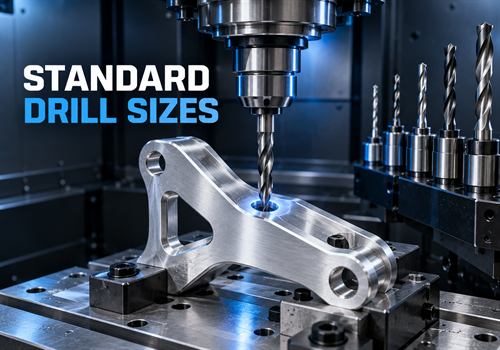
How Can Standard Drill Sizes Reduce the Cost of Machined Holes?

Quick Answer Standard drill sizes can reduce the cost of machined holes because they are more likely to be available in a supplier’s existing tool inventory. Using a commonly stocked drill can reduce: Special-tool purchases Tool-change time Setup complexity Programming effort Quotation uncertainty Replacement-tool delays This does not mean every hole should be [...]

2026-10-03T01:26:50+00:00October 3rd, 2026|Blog|

How Missing Drawing Details Delay CNC Machining Quotes?

When buyers request a CNC machining quote, speed matters. A clear RFQ package can often be reviewed quickly, while an incomplete drawing may lead to several rounds of questions before pricing can begin. Missing drawing details do not only slow down communication. They also create uncertainty for material selection, machining process planning, tolerance control, [...]

2026-06-27T00:18:19+00:00June 27th, 2026|Blog|

What Information Should a CNC Machining RFQ Package Include?

Submitting a complete CNC machining RFQ package helps manufacturers understand your requirements, evaluate manufacturability, and prepare an accurate quotation. Missing drawings, unclear tolerances, or unspecified finishes often lead to additional questions and longer quotation times. Whether you need a single prototype or repeat production, your RFQ should clearly describe the part, material, quality requirements, [...]

2026-06-20T00:15:42+00:00June 20th, 2026|Blog|
Go to Top