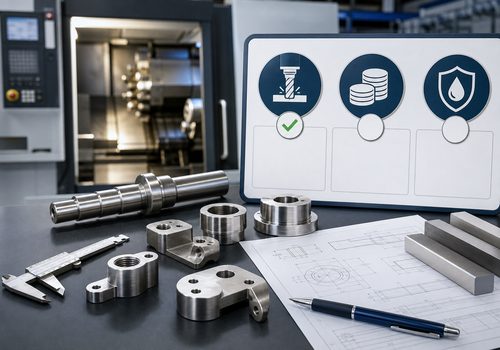
Free-machining stainless steel is often selected when a CNC part needs the appearance and corrosion resistance of stainless steel, but also needs better machinability, shorter cycle time, and more stable chip control.
For many precision CNC components, material selection is not only about strength or corrosion resistance. It also affects tool life, machining cost, surface finish, dimensional consistency, and delivery time.
The key question is simple: when is free-machining stainless steel acceptable, and when should you choose another stainless steel grade?
What Is Free-Machining Stainless Steel?
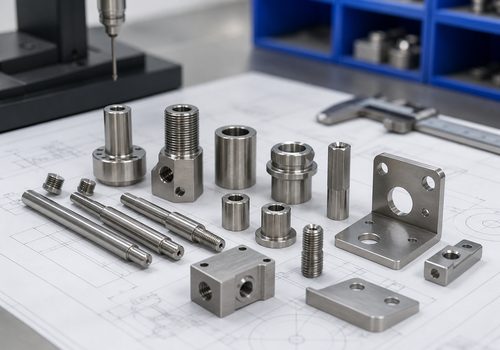
Free-machining stainless steel refers to stainless steel grades designed to machine more easily than standard stainless steels. One common example is 303 stainless steel, which is often used for turned parts, threaded parts, spacers, bushings, shafts, fittings, and small precision components.
These materials usually improve machinability by adding elements that help chips break more easily and reduce tool wear. The result is better production efficiency, especially in CNC turning and high-volume machining.
However, this improvement comes with tradeoffs. Free-machining stainless steel may have lower corrosion resistance, reduced weldability, or lower toughness compared with some standard stainless steels such as 304 or 316.
Why Designers Consider Free-Machining Stainless Steel
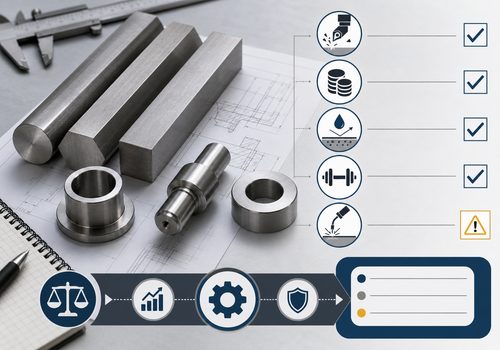
Free-machining stainless steel is considered when production efficiency matters.
It may help with:
- Shorter machining cycle time
- Better chip breaking
- More stable CNC turning
- Improved tool life
- Good dimensional repeatability
- Cleaner threads
- Lower machining cost for suitable parts
- More predictable production for small precision components
For buyers sourcing custom CNC parts, this can reduce quotation uncertainty and improve repeat production stability.
When Is Free-Machining Stainless Steel Acceptable?
Free-machining stainless steel can be acceptable when the part is mainly machined, not welded, and used in a moderate environment.
It is often suitable for:
- Spacers
- Bushings
- Standoffs
- Shafts
- Threaded inserts
- Pins
- Fittings
- Fastener-style components
- Sensor mounts
- Light-duty brackets
- Precision turned parts
- Non-critical stainless hardware
It is especially useful when the design has many turned features, threads, grooves, or small-diameter details that benefit from clean chip control.
1. When Machinability Is a Priority
The main reason to choose free-machining stainless steel is machinability.
Standard stainless steel can be difficult to machine because it may produce long stringy chips, generate heat, and cause tool wear. Free-machining grades can reduce these problems.
This is useful when the part has:
- Deep threads
- Small diameters
- Multiple turned steps
- Grooves
- Thin features
- Repeated production quantities
- Tight cycle time targets
For CNC suppliers, better machinability can mean more stable production and fewer interruptions.
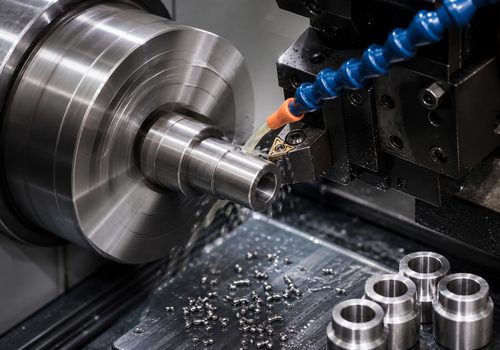
2. When Chip Control Matters
Chip control is important in CNC turning. Long, tangled chips can damage surfaces, interfere with tools, and slow down production.
Free-machining stainless steel helps create shorter, more manageable chips. This can improve:
- Tool life
- Surface finish
- Operator safety
- Process stability
- Automated production
- Thread quality
- Dimensional consistency
For small turned stainless steel parts, chip control can be a major reason to select a free-machining grade.
3. When the Part Is Not Welded
Free-machining stainless steel is usually not the best choice for welded structures.
Some free-machining stainless steels have additives that improve machining but reduce weldability. If the part must be welded, formed, or heavily fabricated, a standard stainless steel such as 304 or 316 may be more appropriate.
Free-machining stainless steel is more suitable for parts that are:
- CNC turned
- CNC milled
- Drilled
- Tapped
- Threaded
- Used as separate machined components
- Assembled mechanically instead of welded
If welding is required, tell the supplier before confirming the material.
4. When Corrosion Exposure Is Moderate
Free-machining stainless steel can provide useful corrosion resistance, but it is not always equal to 304 or 316 stainless steel.
It may be acceptable for:
- Indoor mechanical parts
- Light outdoor exposure
- Dry or mildly humid environments
- Components with limited chemical exposure
- General stainless hardware
- Non-marine applications
It may not be ideal for:
- Marine environments
- Salt spray exposure
- Chemical processing
- Food-contact applications requiring specific standards
- Medical applications
- High-corrosion outdoor conditions
If corrosion resistance is the main priority, 316 stainless steel may be a better choice.
5. When the Part Is Precision-Machined Rather Than Highly Loaded
Free-machining stainless steel is a practical choice for precision machined parts where machining quality and repeatability matter more than maximum strength.
Good candidates include:
- Precision spacers
- Threaded bushings
- Small shafts
- Pins
- Sleeves
- Standoffs
- Light-duty mounting blocks
- Instrument components
- Mechanical adjustment parts
For high-load, impact-sensitive, or safety-critical parts, the material should be reviewed carefully. A stronger stainless steel, precipitation-hardening stainless steel, or alloy steel may be more suitable.
When Free-Machining Stainless Steel May Not Be the Best Choice
Free-machining stainless steel is not a universal replacement for other stainless steels.
Avoid or review it carefully when the part requires:
- Welding
- Severe corrosion resistance
- High toughness
- High impact resistance
- Marine exposure
- High-temperature service
- Food or medical compliance
- Heavy structural loading
- Mirror polishing or special cosmetic finishing
- Long-term outdoor exposure in harsh conditions
The correct choice depends on the application, not only the machining cost.
303 vs 304 vs 316 Stainless Steel
A simple comparison helps clarify the decision.
| Material | Main Advantage | Typical Use |
|---|---|---|
| 303 stainless steel | Better machinability | CNC turned parts, spacers, bushings, threaded parts |
| 304 stainless steel | General corrosion resistance and formability | General stainless components, sheet metal, brackets |
| 316 stainless steel | Better corrosion resistance | Marine, chemical, outdoor corrosion-prone parts |
If machining efficiency is the priority and corrosion exposure is moderate, 303 may be acceptable. If corrosion resistance is more important, 304 or 316 may be safer.
Design Checklist Before Choosing Free-Machining Stainless Steel
Before specifying free-machining stainless steel, review these questions:
- Is the part mainly CNC machined?
- Does the part need good chip control?
- Is the part non-welded?
- Is corrosion exposure moderate?
- Is the part not safety-critical?
- Is high impact toughness not required?
- Is the part suitable for mechanical assembly?
- Are surface finish expectations realistic?
- Is the target cost sensitive to machining time?
- Has the supplier confirmed material availability?
If most answers are yes, free-machining stainless steel may be a practical design choice.
RFQ Information to Send Your CNC Supplier
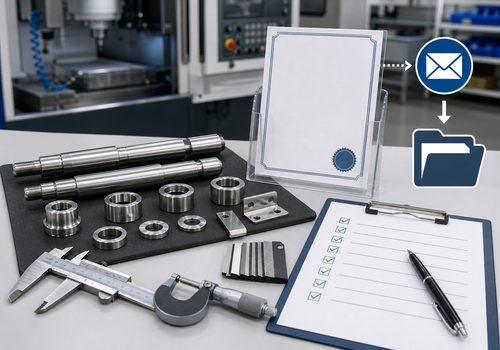
To get a reliable quotation, send a clear RFQ package.
Include:
- 3D CAD model
- 2D engineering drawing
- Material grade, such as 303 stainless steel
- Quantity and price breaks
- Critical tolerances
- Thread details
- Surface finish requirement
- Application environment
- Welding or no-welding confirmation
- Inspection requirements
- Packaging requirements
- Target delivery schedule
If you are unsure whether free-machining stainless steel is suitable, send the application details and ask the supplier to review the material choice before quoting.
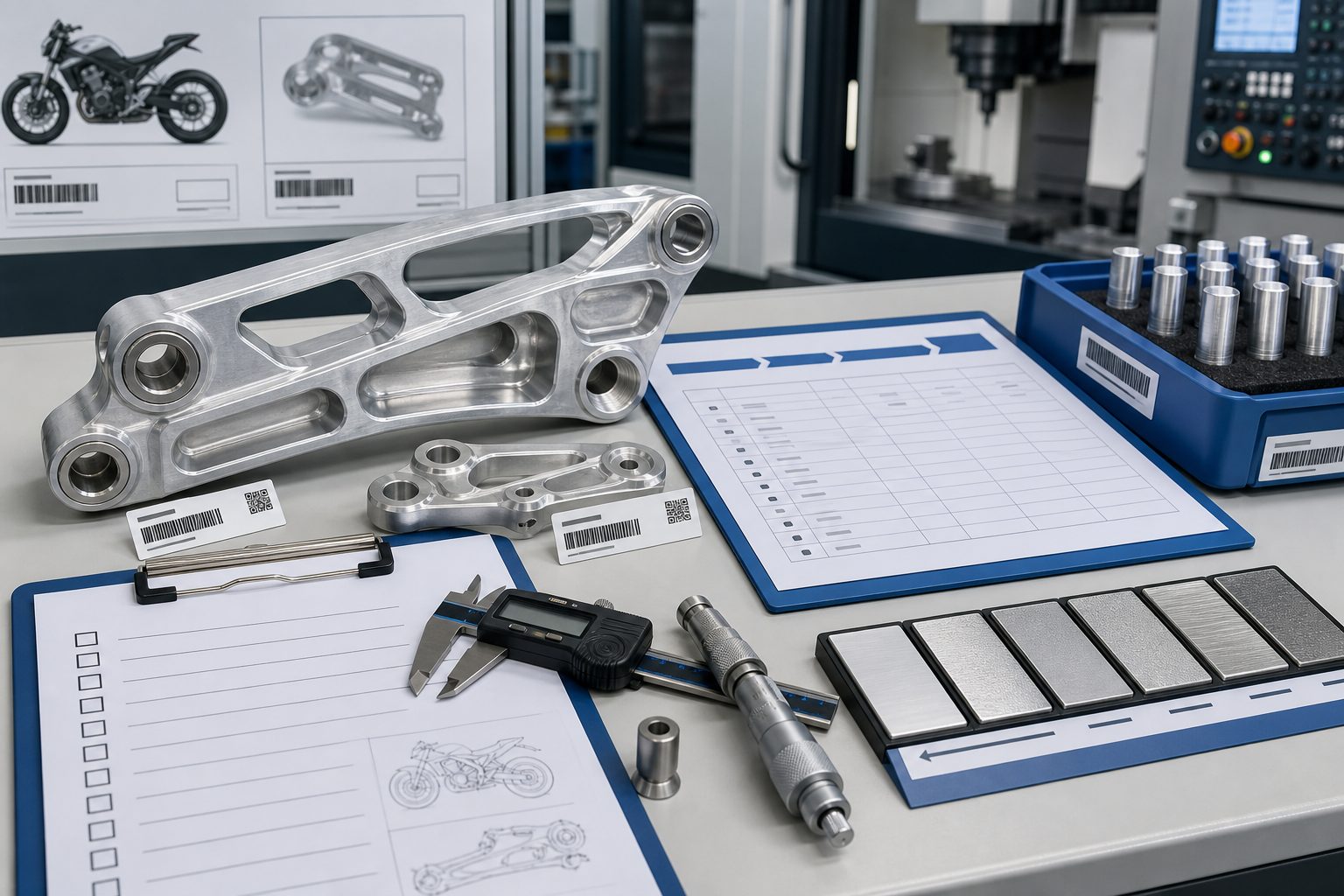
Example: Stainless Steel Spacer for a Motorcycle Assembly
A buyer needs a small stainless steel spacer for a motorcycle accessory kit. The part has a turned outside diameter, drilled center hole, chamfers, and moderate tolerance requirements.
Free-machining stainless steel may be acceptable if:
- The part is not welded
- It is not exposed to severe corrosion
- It is not a high-impact safety component
- Clean machining and repeatability are important
- The buyer wants stable production cost
For this type of part, 303 stainless steel may reduce machining difficulty compared with 304.
However, if the spacer is used in a highly corrosive outdoor environment, 316 stainless steel may be more appropriate.
How a CNC Supplier Can Help
A practical CNC supplier should not only quote the drawing. The supplier should also review whether the material fits the part function, machining process, finish, and expected use environment.
For custom stainless steel parts, a supplier can help evaluate:
- Whether 303, 304, 316, or another grade is better
- Whether the part design is suitable for CNC machining
- Whether tolerances are realistic
- Whether threads and holes are manufacturable
- Whether finishing requirements affect cost
- Whether the part should be made by CNC turning, milling, or fabrication
This review can reduce cost, avoid wrong material selection, and improve production reliability.
FAQ
What is free-machining stainless steel?
Free-machining stainless steel is a stainless steel grade designed to machine more easily than standard stainless steels. It usually offers better chip control and improved CNC production efficiency.
Is 303 stainless steel free-machining?
Yes. 303 stainless steel is one of the most common free-machining stainless steels used for CNC turned and machined parts.
Is free-machining stainless steel corrosion resistant?
It has useful corrosion resistance, but it may not match 304 or 316 stainless steel in more demanding environments. For marine or chemical exposure, 316 may be a better choice.
Can free-machining stainless steel be welded?
It is usually not preferred for welding. If welding is required, discuss the application with your supplier before selecting the material.
What parts are good candidates for free-machining stainless steel?
Good candidates include spacers, bushings, shafts, pins, standoffs, threaded parts, fittings, sleeves, and small precision machined components.
Conclusion
Free-machining stainless steel is an acceptable design choice when the part needs efficient CNC machining, good chip control, stable dimensions, and moderate corrosion resistance.
It is especially useful for precision turned parts, spacers, bushings, shafts, threaded components, and small stainless steel hardware. However, it should be avoided or reviewed carefully for welded parts, severe corrosion environments, high-impact applications, and safety-critical components.
If you are developing custom CNC stainless steel parts, send us your drawing, 3D model, material requirement, quantity, and application details. We can review whether free-machining stainless steel is suitable and suggest a practical manufacturing approach for prototype, small batch, or repeat production.