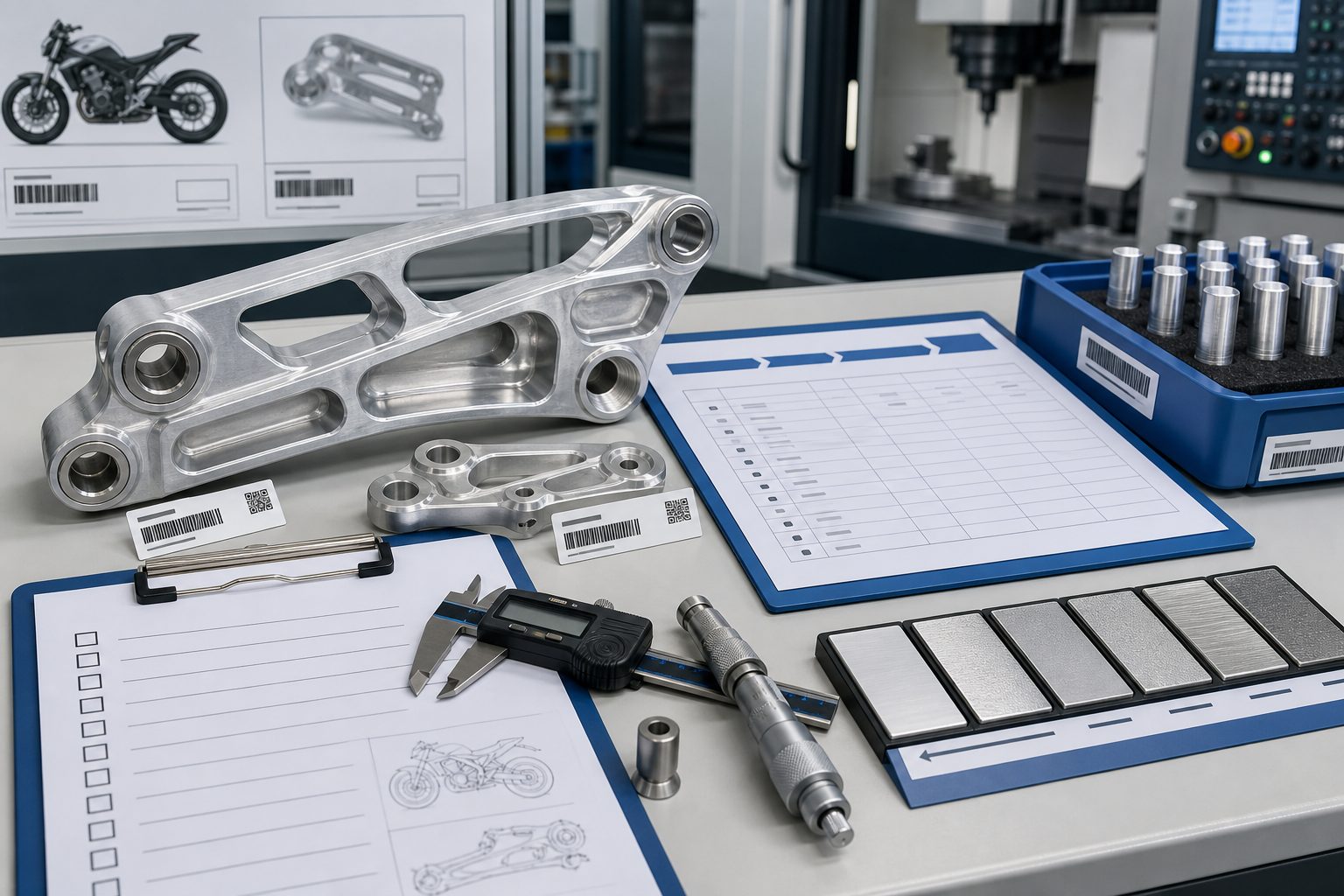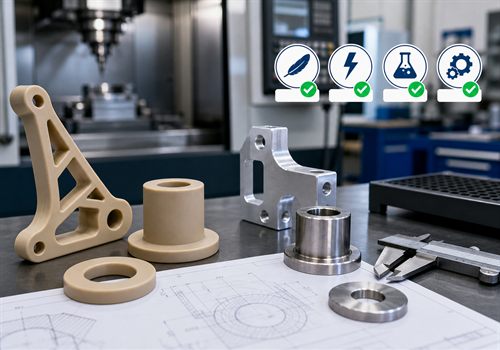
PEEK is often considered when a metal CNC component becomes too heavy, too conductive, too prone to corrosion, or unsuitable for a specific working environment. As a high-performance engineering plastic, PEEK can offer a useful combination of strength, thermal stability, chemical resistance, low friction, and electrical insulation.
However, PEEK should not replace metal automatically. It works best when the design requirement matches the material’s advantages. For custom CNC parts, the decision should be based on load, temperature, wear, tolerance, chemical exposure, assembly method, and cost.
What Is PEEK?
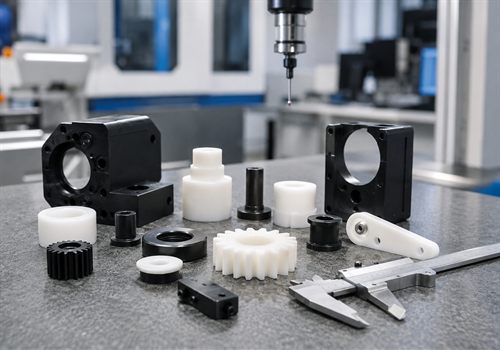
PEEK, or polyether ether ketone, is a high-performance thermoplastic used for precision machined components. It is much lighter than metal and performs well in applications where ordinary plastics are not strong or stable enough.
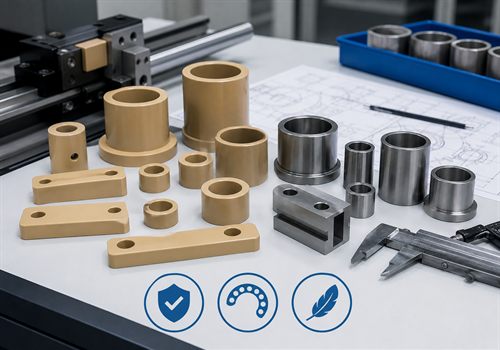
PEEK is commonly used for:
- Bushings
- Spacers
- Washers
- Insulators
- Bearing sleeves
- Guide blocks
- Seals
- Pump and valve components
- Lightweight brackets
- Electrical isolation parts
In CNC machining, PEEK is usually selected when a part needs more than basic plastic performance.
Why Replace Metal With PEEK?
Metal is strong, rigid, and familiar. But it is not always the best solution.
PEEK may be a better choice when the component needs:
- Lower weight
- Electrical insulation
- Corrosion resistance
- Chemical resistance
- Low friction
- Wear performance
- Non-magnetic behavior
- Reduced noise or vibration
- No surface coating requirement
For some CNC-machined components, replacing aluminum, stainless steel, or carbon steel with PEEK can simplify the design and reduce secondary processing.
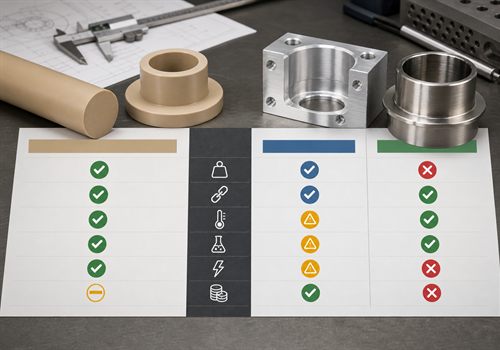
When Should PEEK Replace Metal?
PEEK can replace metal when the part does not rely mainly on metal-level strength or stiffness, and when PEEK’s functional benefits are more valuable than the extra rigidity of metal.
Good application conditions include:
- Moderate mechanical load
- Need for insulation
- Sliding or wear contact
- Chemical exposure
- Corrosion concerns
- Weight-sensitive assemblies
- Electrical isolation requirements
- Low-friction movement
- Non-metallic material requirement
If the part is highly loaded, impact-sensitive, safety-critical, or exposed to extreme mechanical stress, metal may still be the safer choice.
1. When Weight Reduction Matters
PEEK is much lighter than stainless steel and many other metals. This can be useful in compact assemblies where every gram matters.
PEEK may be considered for:
- Lightweight spacers
- Non-structural brackets
- Covers
- Insulating standoffs
- Guide blocks
- Low-load support parts
For motorcycle accessories, industrial devices, and precision equipment, weight reduction can improve usability and assembly efficiency. However, if the part carries heavy load, the design should be reviewed carefully before replacing metal.
2. When Electrical Insulation Is Required
One major reason to choose PEEK is electrical insulation. Unlike aluminum or stainless steel, PEEK does not conduct electricity.
This makes it suitable for:
- Electrical isolation spacers
- Insulating washers
- Sensor mounts
- Battery-related separators
- Electronic equipment fixtures
- Connector support parts
- Non-conductive mounting blocks
If a metal part creates unwanted electrical contact, PEEK may solve the problem without adding extra insulation layers.
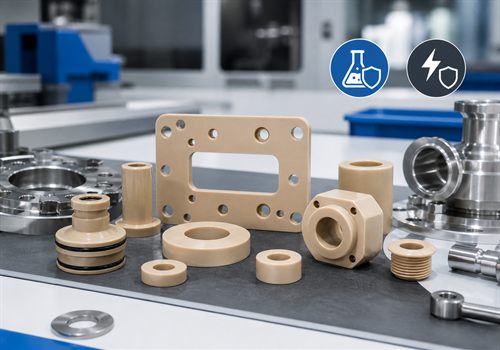
3. When Chemical Resistance Is Important
PEEK offers strong resistance to many chemicals compared with standard plastics. This can make it useful for components exposed to oils, fuels, cleaning agents, or industrial fluids.
PEEK may be suitable for:
- Pump components
- Valve parts
- Fluid handling spacers
- Chemical-resistant bushings
- Sealing support parts
- Processing equipment components
The exact chemical environment should always be confirmed. Concentration, temperature, exposure time, and mechanical load can all affect material suitability.
4. When Low Friction and Wear Resistance Are Needed
PEEK is often used for moving or sliding components because it can provide useful wear performance and low friction.
Possible applications include:
- Bushings
- Bearing sleeves
- Wear pads
- Sliding blocks
- Guide rails
- Rollers
- Spacers in moving assemblies
Compared with metal-to-metal contact, PEEK can help reduce noise, friction, and wear in suitable applications. In some assemblies, it may also reduce the need for additional coatings.
5. When Corrosion Is a Problem
Metal parts may require anodizing, plating, passivation, powder coating, or other surface treatments to resist corrosion. PEEK does not rust and does not need corrosion-protection coating in the same way.
PEEK can be useful for:
- Humid environments
- Parts exposed to cleaning fluids
- Outdoor equipment assemblies
- Components near corrosive substances
- Non-metallic fixtures
For corrosion-sensitive applications, PEEK may reduce maintenance and simplify the supply chain.
When Should Metal Still Be Used?
PEEK is not a direct replacement for metal in every design.
Metal is usually better when the part requires:
- Very high stiffness
- High structural strength
- High impact resistance
- Thin-wall strength
- Heavy clamping load
- High torque transfer
- Welded assembly
- Very tight threaded strength
- Low material cost
- Metal surface appearance
If the part is safety-critical or highly loaded, do not switch to PEEK without engineering review and testing.
CNC Machining Considerations for PEEK
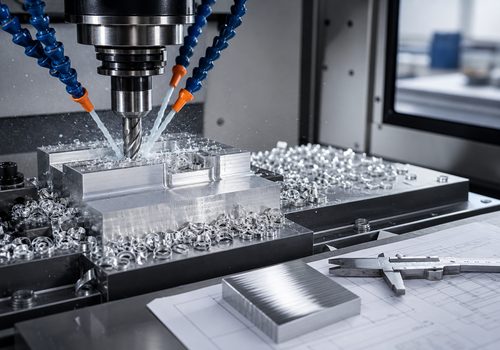
PEEK can be CNC machined into accurate parts, but the machining strategy is different from metal machining.
Key points include:
- Use sharp tools
- Avoid excessive heat
- Control clamping force
- Support thin-wall features
- Avoid burrs and edge lifting
- Consider material stress relief
- Confirm tolerance after machining
- Avoid aggressive cutting that causes deformation
PEEK is less rigid than metal, so fixturing and tool pressure must be controlled. Thin features may deflect if the machining process is not stable.
Design Checklist Before Replacing Metal With PEEK
Before choosing PEEK, review:
- What load will the part carry?
- Is stiffness critical?
- Is electrical insulation needed?
- Is chemical resistance required?
- Will the part slide or wear against another surface?
- What is the working temperature?
- Is impact resistance important?
- Are threads required?
- What tolerances are critical?
- Is the part used indoors or outdoors?
- Is cost acceptable for the application?
A correct material decision should come from the working condition, not only from the desire to reduce weight.
RFQ Information to Send for CNC Machined PEEK Parts
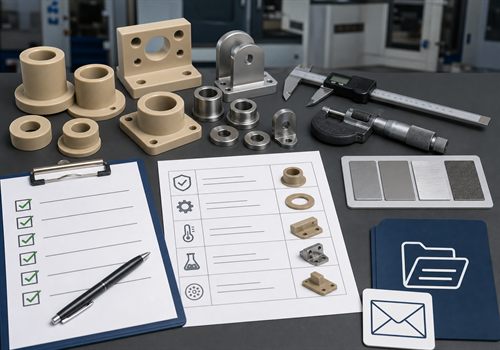
To get a practical quotation, send your CNC supplier:
- 3D CAD model
- 2D engineering drawing
- Required material grade
- Quantity
- Application environment
- Working temperature
- Mechanical load condition
- Critical tolerances
- Thread or insert requirements
- Surface finish requirement
- Inspection requirements
- Packaging requirements
- Metal part sample or current drawing, if replacing an existing metal part
If you are not sure whether PEEK is suitable, send the application details and ask for a manufacturability review before production.
Example: Replacing a Metal Spacer With PEEK
A stainless steel spacer may be strong and easy to machine, but it may also add weight and conduct electricity. If the spacer is used in a moderate-load assembly where electrical isolation matters, PEEK may be a better option.
PEEK may be suitable if:
- The part is not heavily loaded
- Electrical insulation is required
- Corrosion resistance is useful
- Weight reduction is valuable
- The tolerance can be achieved with plastic machining
- The cost is acceptable
Metal may still be better if the spacer carries high compression load, supports a safety-critical joint, or requires very high stiffness.
How a CNC Supplier Can Help
A CNC supplier can help review whether PEEK is suitable before the design is released for production.
A practical review should check:
- Material suitability
- Machining feasibility
- Tolerance risk
- Wall thickness
- Thread strength
- Fixture method
- Burr control
- Quantity and cost
- Whether metal inserts are needed
- Whether prototype testing is recommended
This review helps prevent wrong material selection and reduces production risk.
FAQ
Can PEEK replace aluminum in CNC parts?
Yes, in some applications. PEEK can replace aluminum when insulation, corrosion resistance, low friction, or weight reduction is more important than aluminum-level stiffness and strength.
Can PEEK replace stainless steel?
Sometimes. PEEK may replace stainless steel in moderate-load applications where corrosion resistance, insulation, or low friction is required. Stainless steel is usually better for high-load or high-stiffness parts.
Is PEEK easy to CNC machine?
PEEK can be CNC machined well, but it requires sharp tools, controlled heat, proper fixturing, and careful handling of tolerances.
Is PEEK suitable for threaded parts?
PEEK can be threaded, but thread strength is lower than metal. For repeated assembly or higher load, metal inserts may be considered.
What parts are good candidates for CNC machined PEEK?
Good candidates include bushings, spacers, washers, insulators, guide blocks, wear pads, sleeves, and moderate-load brackets.
Conclusion
PEEK should replace metal in a CNC-machined component when its functional advantages are more important than metal’s strength and stiffness. It is useful for lightweight, insulating, low-friction, wear-resistant, chemical-resistant, and corrosion-free components.
It should be reviewed carefully for high-load, impact-sensitive, tight-threaded, or safety-critical parts.
If you are developing a custom CNC-machined PEEK part or considering replacing a metal component with PEEK, send us your drawing, 3D model, quantity, and application details. We can review the material choice and suggest a practical manufacturing approach for prototype, small batch, or repeat production.