Quick Answer
Delrin parts can be designed to minimize dimensional instability by keeping wall thickness uniform, avoiding heavy unbalanced sections, adding generous radii, controlling moisture and temperature exposure, using realistic tolerances, and planning machining and inspection around material movement. A 3D model is useful, but a complete drawing should also define critical dimensions, datum references, operating conditions, and inspection requirements.
Why Dimensional Instability Matters in Delrin CNC Parts
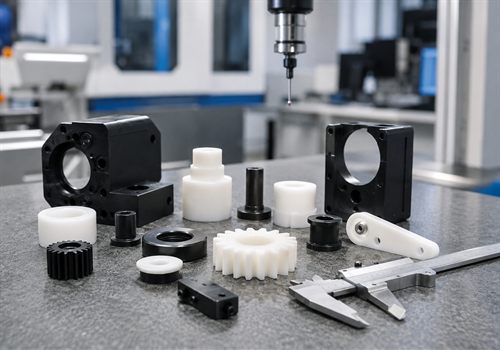
Delrin, also known as POM or acetal, is widely used for precision CNC machined components because it offers low friction, good wear resistance, high stiffness compared with many plastics, and excellent machinability.
However, Delrin is still an engineering plastic, not metal. Its dimensions can change due to internal stress, machining heat, moisture absorption, storage conditions, part geometry, and operating temperature. If these factors are ignored, a part may meet inspection immediately after machining but shift slightly after conditioning, assembly, or real use.
For buyers, this can create assembly issues, inconsistent fits, rejected batches, and longer approval cycles. For suppliers, unclear design requirements can lead to repeated sampling and delayed quotes. Good design control helps both sides avoid these problems.
1. Keep Wall Thickness as Uniform as Possible
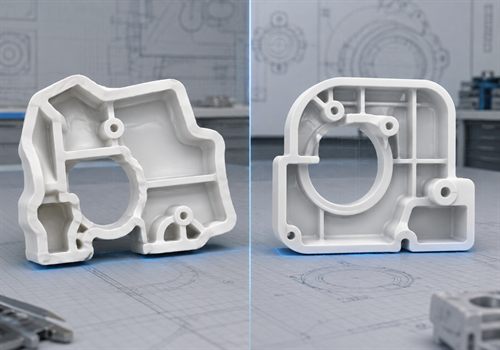
Uneven wall thickness is one of the most common reasons Delrin parts move after machining. Thick sections cool and relax differently from thin sections. Large material removal from one side of the part can also release stress unevenly.
For better stability:
- Avoid sudden changes from thick to thin sections.
- Use pockets or lightening cuts to reduce heavy mass.
- Add ribs instead of solid blocks where strength allows.
- Keep the part geometry balanced around the main functional features.
- Avoid long unsupported thin walls unless they are necessary.
If a Delrin housing, spacer, guide block, or bracket must include thick sections, discuss the geometry with your CNC supplier before finalizing the drawing. In many cases, a small design change can improve dimensional repeatability without affecting function.
2. Use Radii to Reduce Stress Concentration
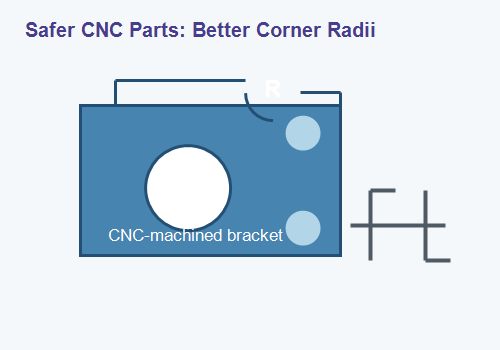
Sharp internal corners are difficult for CNC machining and can increase stress concentration in plastic parts. In Delrin, stress concentration may contribute to slight deformation, cracking risk, or long-term dimensional drift under load.
A practical design should include:
- Internal corner radii suitable for standard end mills.
- Rounded transitions between ribs, bosses, and walls.
- Chamfers or radii on exposed edges where assembly allows.
- Avoidance of very deep sharp pockets.
This also helps reduce machining time, tool pressure, and surface defects. For RFQs, adding corner radius requirements to the drawing helps the supplier choose suitable tooling and quote more accurately.
3. Design Around Temperature and Moisture Conditions
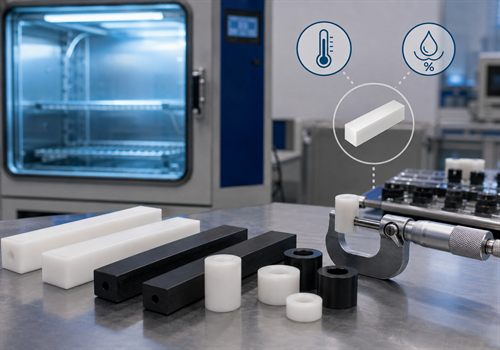
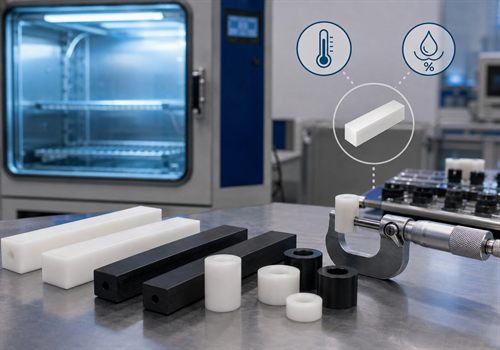
Delrin has better moisture resistance than some plastics, but it can still respond to humidity and temperature changes. This matters when parts are used in outdoor equipment, motorcycle accessories, mechanical guides, bushings, electrical fixtures, or assemblies exposed to heat.
Before defining tight tolerances, consider:
- Operating temperature range
- Storage environment
- Exposure to water, oil, fuel, or chemicals
- Whether the part is assembled immediately after machining
- Whether inspection should be done after conditioning
If the part will be used in a warmer environment than the inspection room, the drawing should identify critical functional dimensions and expected service conditions. This allows the manufacturer to plan machining, stabilization, and inspection more responsibly.
4. Avoid Overly Tight Tolerances on Non-Critical Features
Delrin can be machined accurately, but applying metal-like tolerances to every plastic feature often increases cost and risk without improving function. The better approach is to separate critical dimensions from general dimensions.
Use tight tolerances only for:
- Bearing fits
- Shaft holes
- Sliding interfaces
- Sealing surfaces
- Alignment features
- Assembly datums
Use general tolerances for:
- Clearance pockets
- Cosmetic edges
- Non-functional outside profiles
- Weight-reduction areas
- Unloaded ribs and bosses
This makes the RFQ clearer and helps suppliers focus process control on the dimensions that actually affect performance.
5. Control Machining Stress with Practical Process Planning
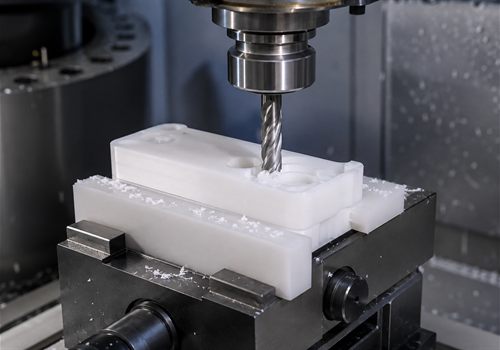
Dimensional stability is not only a design issue. Machining strategy also matters. Delrin can deform if the part is clamped too aggressively, machined with dull tools, overheated, or released from fixtures after heavy one-sided material removal.
A capable CNC supplier may reduce risk by using:
- Sharp tools for plastic machining
- Moderate cutting heat
- Balanced roughing and finishing passes
- Soft jaws or custom fixtures
- Rest time between roughing and finishing when needed
- Proper chip evacuation
- Inspection after the part has relaxed
For parts with tight flatness, parallelism, or bore position requirements, process planning should be discussed before production rather than after inspection problems appear.
6. Add Datum References and Inspection Conditions to the Drawing
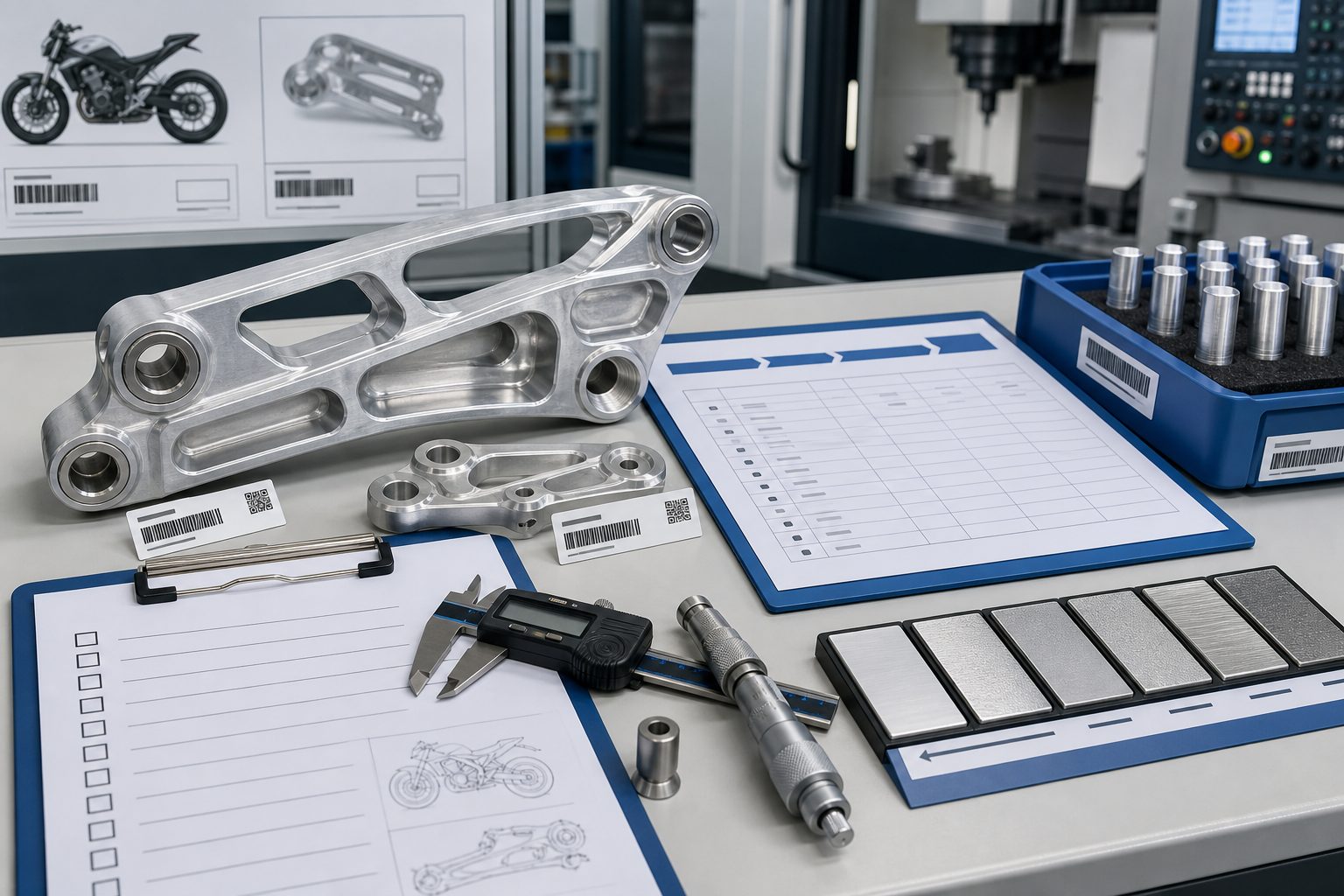
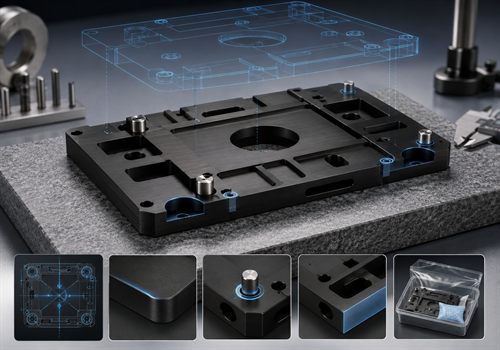
A 3D model shows geometry, but it does not always communicate how the part should be measured. This is especially important for Delrin parts because plastic components can be more sensitive to clamping, temperature, and inspection method.
A good drawing should define:
- Primary datum surfaces
- Critical-to-function dimensions
- Hole position requirements
- Flatness or parallelism where needed
- Inspection temperature if important
- Whether dimensions apply before or after conditioning
- Surface finish requirements
- Any assembly-fit requirements
When this information is missing, suppliers may quote based only on geometry. That can lead to misunderstandings if the actual functional requirement is more demanding than the model suggests.
7. Consider Material Grade and Color
Not all acetal materials behave exactly the same. Homopolymer acetal, copolymer acetal, filled grades, black Delrin, natural Delrin, and other POM variants may differ in mechanical behavior, dimensional response, wear performance, and availability.
For RFQs, specify:
- Material name or equivalent grade
- Color requirement
- Filled or unfilled material
- Food, electrical, wear, or chemical requirements if applicable
- Whether material substitution is allowed
If the exact grade is not mandatory, state the application clearly. A supplier can then recommend a suitable POM/acetal option instead of guessing.
8. Design for Real Assembly Conditions
A Delrin part may look stable as a standalone component but change behavior after installation. Fasteners, press fits, bearing loads, sliding contact, or thermal expansion from nearby metal parts can affect final performance.
Designers should check:
- Whether screws compress plastic features
- Whether holes need clearance instead of tight fits
- Whether metal inserts are required
- Whether long slots should allow expansion
- Whether mating metal parts expand differently
- Whether the Delrin part carries load continuously
For motorcycle-related or mechanical accessory parts, this is especially relevant where vibration, outdoor temperature, oil exposure, and repeated assembly may occur.
Delrin Part Design Checklist Before Sending an RFQ
Before requesting a quote for CNC machined Delrin parts, prepare the following information:
- 3D model in STEP, STP, or similar format
- 2D drawing with critical dimensions
- Material grade or acceptable alternatives
- Quantity and expected production stage
- Critical tolerances and general tolerances
- Datum references and inspection method
- Surface finish requirements
- Operating temperature and environment
- Assembly or mating part information
- Special packaging or handling requirements
The more clearly these details are defined, the faster a supplier can evaluate manufacturability, quote accurately, and reduce sampling risk.
Example: A Delrin Guide Block with Tight Bore Alignment
A simple Delrin guide block may include a shaft bore, mounting holes, and a sliding surface. The 3D model may look straightforward, but the quote can change depending on the details.
Important questions include:
- Is the bore a clearance hole or a sliding fit?
- Is bore roundness critical?
- Which surface is the inspection datum?
- Does the sliding face require a specific flatness?
- Will the part be used near heat or moisture?
- Is the part clamped during assembly?
- Should the part be inspected after conditioning?
If these questions are answered early, the supplier can quote the correct machining process instead of assuming a basic plastic block.
How a CNC Supplier Can Help Improve Delrin Stability
An experienced CNC machining supplier can review the model and drawing before production to identify risk areas such as thin walls, heavy material removal, tight plastic tolerances, poor datum selection, or unclear inspection requirements.
For custom parts, supplier feedback may include:
- Adjusting wall thickness
- Adding radii
- Modifying pocket depth
- Changing tolerance strategy
- Improving fixture design
- Recommending material alternatives
- Planning roughing and finishing sequence
This does not mean the product design must change dramatically. Often, small improvements make the part easier to machine and more stable in real use.
FAQ
Is Delrin dimensionally stable?
Delrin is relatively stable compared with many plastics, but it can still change dimensions due to temperature, moisture, internal stress, machining heat, and part geometry. Good design and process control are important for precision CNC parts.
Can Delrin hold tight tolerances?
Yes, Delrin can hold tight tolerances in CNC machining, especially on critical features. However, tolerances should be applied realistically and inspection conditions should be clear.
Why do Delrin parts warp after machining?
Warping may happen because of uneven wall thickness, internal material stress, aggressive clamping, heat buildup, unbalanced material removal, or environmental changes after machining.
Should I send both 3D model and 2D drawing for Delrin parts?
Yes. The 3D model defines the geometry, while the 2D drawing should define tolerances, datums, critical dimensions, material, finish, and inspection requirements.
What information helps suppliers quote Delrin parts faster?
Send the STEP file, 2D drawing, quantity, material grade, critical tolerances, application, operating environment, and any assembly requirements.
Conclusion
Delrin is an excellent material for many CNC machined components, especially where low friction, wear resistance, and lightweight performance are important. But dimensional stability should be designed into the part from the beginning.
Uniform wall thickness, balanced geometry, practical tolerances, clear datum references, proper machining strategy, and complete RFQ information all help reduce movement and improve production consistency.
If you are developing custom Delrin, POM, or other CNC machined plastic parts, send us your 3D model, 2D drawing, quantity, material requirement, and application details. We can review the design for manufacturability and help prepare a practical quotation for prototype, small-batch, or repeat production.