When buyers request a CNC machining quote, speed matters. A clear RFQ package can often be reviewed quickly, while an incomplete drawing may lead to several rounds of questions before pricing can begin.
Missing drawing details do not only slow down communication. They also create uncertainty for material selection, machining process planning, tolerance control, finishing, inspection, and packaging. For custom metal parts, especially parts used in motorcycle brackets, foot pegs, risers, clamps, guards, or adapters, small missing details can affect both cost and manufacturability.
This article explains why incomplete drawings delay CNC machining quotations and what information buyers should include to receive a faster and more accurate response.
Why Drawing Details Matter in CNC Machining Quotes
A CNC machining quote is not based only on the shape of the part. The manufacturer also needs to understand how the part will be made, inspected, finished, and delivered.
A complete drawing helps the supplier estimate:
- Material type and usage
- Machining time
- Tooling requirements
- Fixture complexity
- Tolerance difficulty
- Surface finish process
- Inspection workload
- Scrap risk
- Packaging needs
- Production lead time
If important information is missing, the supplier may not be able to quote responsibly. Instead of guessing, the engineering or sales team must ask follow-up questions. This adds time before the quotation can be prepared.
1. Missing Material Grade
One common reason for quote delays is an unclear material requirement.
For example, “aluminum” is not enough information for a CNC machining quote. Aluminum 6061-T6, 7075-T6, and 5052 have different costs, machining behavior, strength, and finishing results.
The same problem applies to stainless steel and carbon steel. Stainless steel 304 and 316 are not priced or machined the same way. Carbon steel parts may also require different post-processing, rust prevention, or heat treatment.
A drawing or RFQ should clearly state:
- Exact material grade
- Material standard, if required
- Whether equivalent material is acceptable
- Any heat treatment requirement
- Whether a material certificate is needed
If the material is not confirmed, the supplier may need to quote several options or wait for clarification.
2. Missing Tolerance Requirements
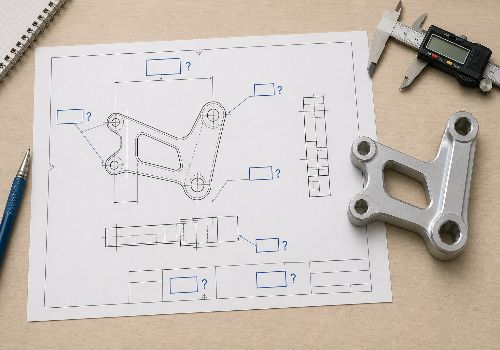
Tolerances directly affect machining cost and lead time. A simple part with standard tolerances may be quick to quote, while a part with tight positional, flatness, or concentricity requirements may need more engineering review.
Problems often happen when drawings show dimensions but do not define tolerance levels.
For example:
- Are all dimensions standard machining tolerance?
- Which holes are critical for assembly?
- Does the part need tight flatness?
- Are bearing or bushing fits required?
- Are cosmetic dimensions less critical than mounting dimensions?
Without this information, the supplier cannot accurately estimate process difficulty or inspection time.
Buyers should avoid applying unnecessarily tight tolerances to every dimension. Instead, mark critical dimensions clearly and use general tolerances for non-critical features.
3. Missing Thread and Hole Details
Threads and holes are small details, but they can cause major quote delays if they are unclear.
A drawing should specify:
- Thread size
- Thread pitch
- Thread depth
- Through hole or blind hole
- Counterbore or countersink size
- Tapped hole tolerance
- Insert requirement
- Chamfer requirement
For motorcycle metal parts such as handlebar clamps, mounting brackets, frame sliders, and adapters, hole position and thread strength are often important. If the thread depth or hole function is missing, the supplier may need to confirm before quoting.
A clear example is:
M8 × 1.25 thread, 15 mm full thread depth
This is much more useful than only writing “M8 hole.”
4. Missing Surface Finish Information
Surface finish can change both cost and production planning.
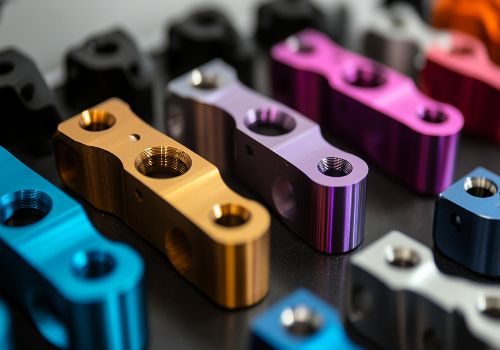
For CNC machined motorcycle parts, common finishes include:
- Clear anodizing
- Black anodizing
- Hard anodizing
- Powder coating
- Brushing
- Polishing
- Bead blasting
- Zinc plating
- Passivation
- Laser marking
If the RFQ only says “black finish,” the supplier may need to ask whether the buyer wants black anodizing, black powder coating, black oxide, or paint.
The drawing or RFQ should also clarify:
- Required finish color
- Cosmetic surface requirements
- Areas that must not be coated
- Masking requirements for threads or holes
- Surface roughness requirement
- Coating thickness requirement
- Whether small color variation is acceptable
Surface treatment can also affect part dimensions. Critical holes or threaded areas may need masking or post-finish inspection.
5. Missing Quantity and Order Stage
A CNC machining quote depends heavily on quantity. One prototype, 50 pieces, and 1,000 pieces may require different production methods.
For prototype orders, the supplier may use flexible setups. For repeat production, dedicated fixtures may reduce unit cost but add upfront preparation.
A useful RFQ should include:
- Prototype quantity
- First batch quantity
- Expected repeat order quantity
- Annual forecast, if available
- Required price breaks
For example:
| Quantity Stage | Quantity |
|---|---|
| Prototype | 2 pieces |
| Trial Order | 50 pieces |
| Production Batch | 500 pieces |
If the quantity is missing, the supplier cannot calculate setup cost properly. This often causes delay because the quotation team must ask whether the buyer needs prototype pricing or batch production pricing.
6. Missing Application Information
A drawing shows geometry, but it may not explain how the part will be used.
Application information helps the manufacturer understand the function of the part. This is especially useful for custom motorcycle components that may face vibration, outdoor exposure, heat, impact, or repeated assembly.
Useful application details include:
- Motorcycle model or application
- Load-bearing or decorative function
- Indoor or outdoor use
- Heat or corrosion exposure
- Mating parts
- Assembly method
- Safety-critical areas
The buyer does not need to share confidential product strategy. However, basic application information helps the supplier identify possible manufacturing risks and ask better technical questions.

7. Missing Drawing Revision Control
Another common delay comes from mismatched file versions.
For example, the buyer may send:
- One STEP file
- One PDF drawing
- One old DXF file
- One revised screenshot
If the revision levels are not clear, the supplier may not know which file should be used for quotation.
To avoid this problem, each file should include:
- Part number
- Part name
- Revision number
- Date
- Drawing scale, if relevant
- Unit of measurement
- Latest file confirmation
A simple file name structure can help:
PartNumber_PartName_RevB_STEP.stp
PartNumber_PartName_RevB_Drawing.pdf
The part number and revision should match across all files.
8. Missing Inspection Requirements
Inspection requirements affect quotation time and cost.
Some buyers only need standard dimensional inspection. Others require full reports, material certificates, coating thickness reports, or first article inspection.
The RFQ should state whether the order requires:
- Standard inspection
- Full dimensional report
- First article inspection report
- Material certificate
- Surface treatment certificate
- Hardness test
- Coating thickness measurement
- Photos before shipment
- Custom inspection format
If inspection requirements are added after quotation, the original price may no longer be accurate. It is better to include them at the RFQ stage.
9. Missing Packaging Requirements
Packaging is often ignored during the quotation stage, but it matters for finished metal parts.
Anodized, brushed, polished, or powder-coated parts can be scratched during transportation if packaging is not suitable.
For CNC machined motorcycle parts, packaging requirements may include:
- Individual bagging
- Foam separation
- Protective film
- Carton labeling
- Part number labels
- Rust prevention
- Retail packaging
- Maximum carton weight
If the buyer needs retail-ready packaging for an aftermarket parts brand or online store, this should be stated clearly. Retail packaging is different from bulk factory packaging and may affect cost.
10. Missing Target Delivery Date
A quotation also depends on timing.
An urgent prototype order may require different scheduling from a normal production batch. If the delivery date is missing, the supplier may quote a standard lead time, which may not match the buyer’s project plan.
The RFQ should include:
- Required quotation date
- Prototype delivery target
- Production delivery target
- Shipping destination
- Preferred shipping method
- Whether partial shipment is acceptable
If a project is urgent, it is useful to explain which parts are most critical first. Sometimes the supplier can prioritize samples or a small batch before full production.
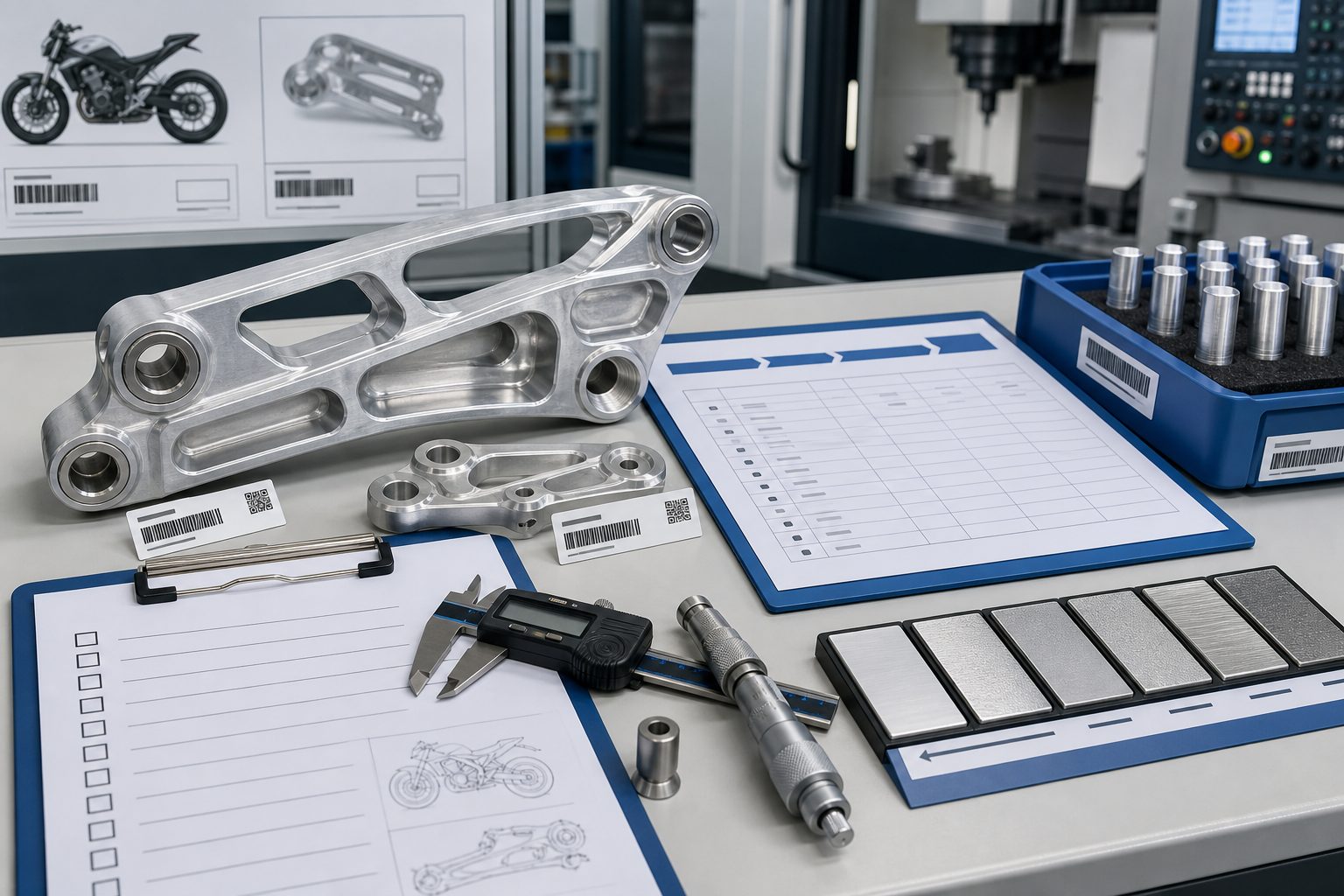
Complete Drawing Checklist for Faster CNC Machining Quotes
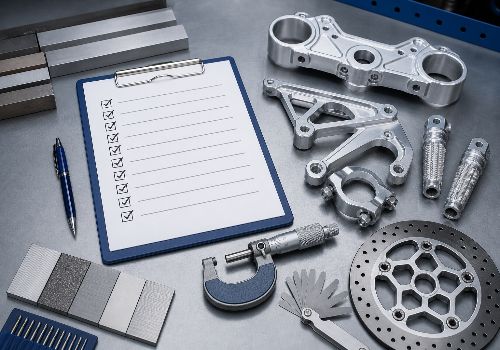
Before sending a CNC machining RFQ, buyers should check whether the package includes the following information:
- 3D CAD file, preferably STEP or STP
- 2D PDF engineering drawing
- Part number and revision
- Unit of measurement
- Material grade
- Quantity and price break requirements
- Critical tolerances
- General tolerance standard
- Thread and hole specifications
- Surface finish requirement
- Cosmetic surface notes
- Inspection requirement
- Packaging requirement
- Delivery destination
- Target delivery date
- Application or assembly information
A complete RFQ package helps the supplier quote faster and reduces the chance of misunderstanding after production starts.
How Manufacturers Handle Incomplete Drawings
When a supplier receives an incomplete drawing, the quotation process usually slows down in one of three ways.
First, the sales team may need to send the drawing back to engineering for review before even asking questions.
Second, the engineering team may prepare a list of missing details, such as material, tolerance, finish, or thread depth.
Third, the buyer may need to check internally with their designer, engineer, or purchasing team before answering.
Each round of clarification can add hours or days. If the buyer is comparing several suppliers, incomplete information can also make quotations difficult to compare.
One supplier may assume standard tolerances, while another may assume tighter requirements. One may include anodizing, while another may quote machined-only parts. The result is not a fair comparison.
Best Practice: Send a Clear RFQ Summary
Along with the drawing files, buyers can include a short RFQ summary table.
Example:
| Item | Requirement |
|---|---|
| Part Name | CNC aluminum mounting bracket |
| Material | Aluminum 6061-T6 |
| Quantity | 20 pcs prototype, 200 pcs batch |
| Finish | Black anodizing |
| Critical Tolerance | Hole position ±0.05 mm |
| Inspection | Standard inspection report |
| Packaging | Individually packed to avoid scratches |
| Delivery | Ship to USA |
This type of summary helps the supplier quickly understand the project scope before reviewing the detailed files.
FAQ
Can I get a CNC machining quote without a 2D drawing?
Sometimes yes, especially for a rough budget estimate. However, a 2D drawing is strongly recommended if the part has critical tolerances, threads, surface finish requirements, or inspection requirements.
Is a STEP file enough for CNC machining?
A STEP file is useful for geometry review and programming, but it does not always include tolerances, material, finish, or inspection requirements. A PDF drawing should usually be included.
Why does tolerance information affect price?
Tighter tolerances may require slower machining, more careful fixturing, additional inspection, or special measuring tools. This can increase both cost and lead time.
Should I include a target price in my RFQ?
You can include a target price if it is realistic. It helps the supplier understand your commercial goal, but it should not replace technical information such as material, quantity, finish, and tolerance.
Conclusion
Missing drawing details can delay a CNC machining quote because the supplier cannot accurately estimate material, process time, tolerance difficulty, finishing cost, inspection work, or delivery schedule.
A complete RFQ package allows the manufacturer to review the part more efficiently and prepare a more reliable quotation. For custom CNC machined and sheet metal motorcycle parts, clear drawings also help reduce production risk and avoid repeated communication.
If you need custom CNC machined motorcycle brackets, foot pegs, risers, adapters, guards, or other metal parts, preparing a detailed drawing package is the first step toward a faster and more accurate quote.